



Professor Brian Cox has urged the Government to "trust, inspire and continue to invest in the next generation of scientists" instead of moving forward with "devastating" funding cuts to astronomy and particle physics research in the UK.
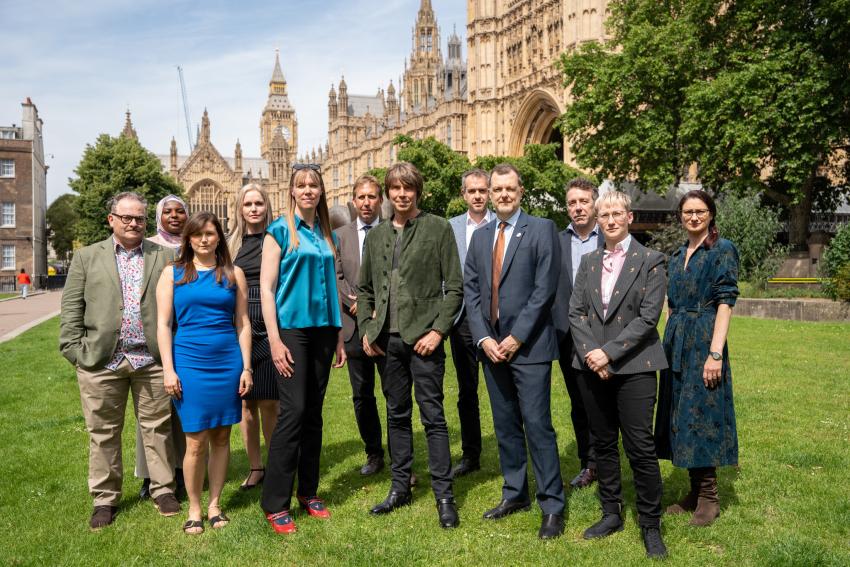
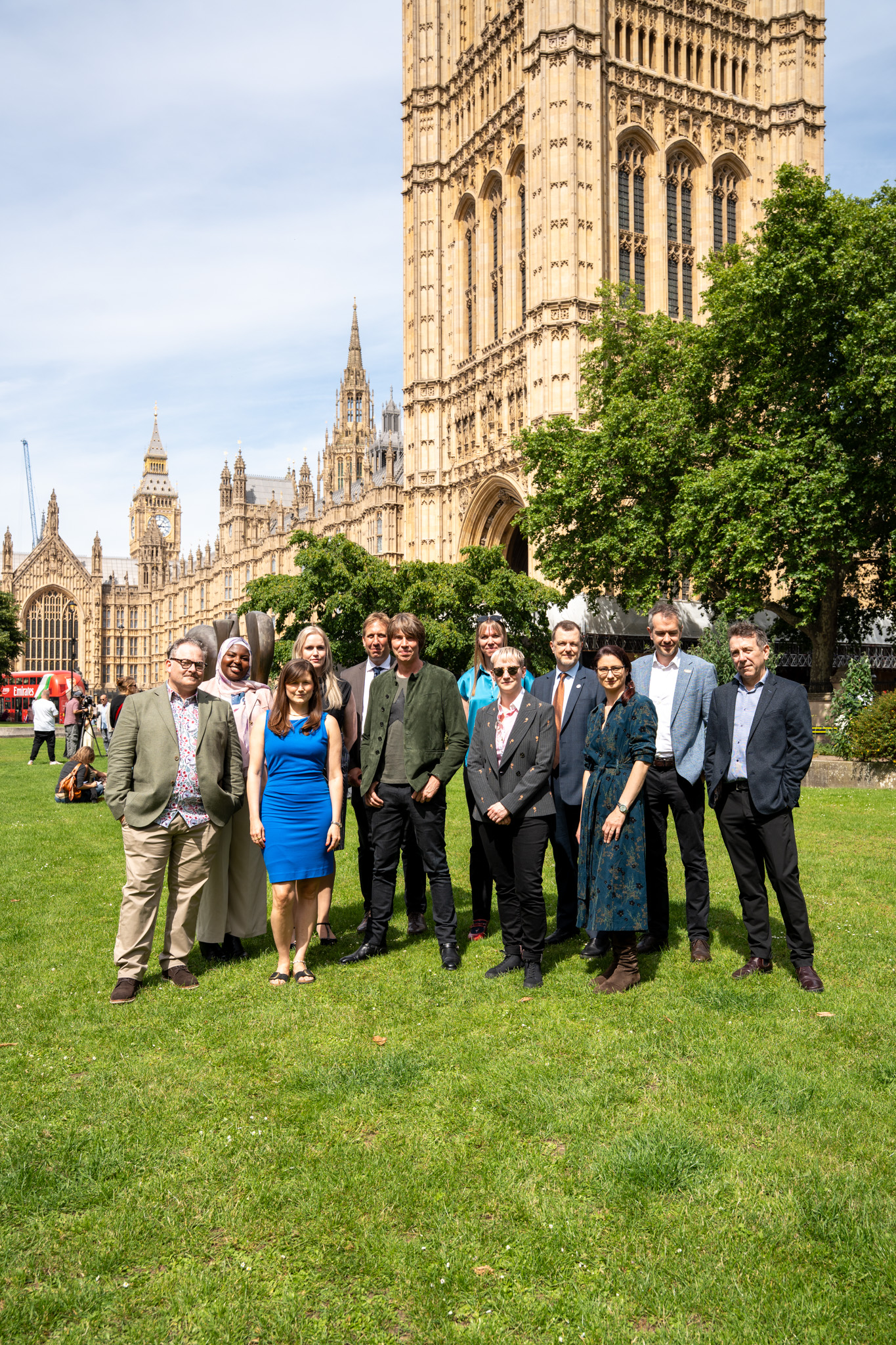
The particle physicist spoke out as he and a host of stars of physics descended on Westminster to campaign against the planned cuts.
"We live in a time of rapid scientific and technological change and opportunity, largely driven by advances in AI, quantum technologies and the expansion of the global economy into space," he said.
"The UK has the expertise, heritage and potential to play a leading role in these transformative technologies, but our ability to do so is threatened by these ill-considered cuts, which appear to have been cooked up in haste in response to vague political messages about focusing on government priorities."
Professor Cox added: "Lord Vallance had it partially right when he said that curiosity-driven research is the work that ultimately creates wealth in 10 or 20 or 30 years' time. He might also have added that the skills necessary to grow the economy now were nurtured 10, 20 and 30 years ago through past investment in curiosity-driven research.
"Damaging two of the most vibrant, challenging and productive areas of physics at a time of increased global competition and unprecedented intellectual challenge is inexplicable to me."
At the beginning of the year the Science and Technology Facilities Council (STFC) sent a shockwave through the UK's astronomy, particle physics and nuclear physics communities with the announcement of up to 30 per cent budget cuts over the next few years.
Worst-hit will be early career researchers, nearly 80 per cent of whom are now considering leaving the UK in the wake of the cuts crisis, according to a staggering new survey which lays bare the feeling of discontent.
It also revealed that just 7 per cent of those asked would recommend the UK for science – compared to 74 per cent before the funding crisis emerged – a damning indictment on a country with aspirations of becoming a 'science superpower'.
"It's clear the next generation of great UK physicists feel disheartened, disillusioned and dismayed by the bleak future they're facing," said astrophysicist and YouTube star Dr Becky Smethurst, a Royal Astronomical Society (RAS) Research Fellow at the University of Oxford.
"The UK's innovation talent pipeline relies on these highly skilled researchers, and with dwindling opportunities here, it's no wonder that most are looking abroad for their next step up the career ladder."
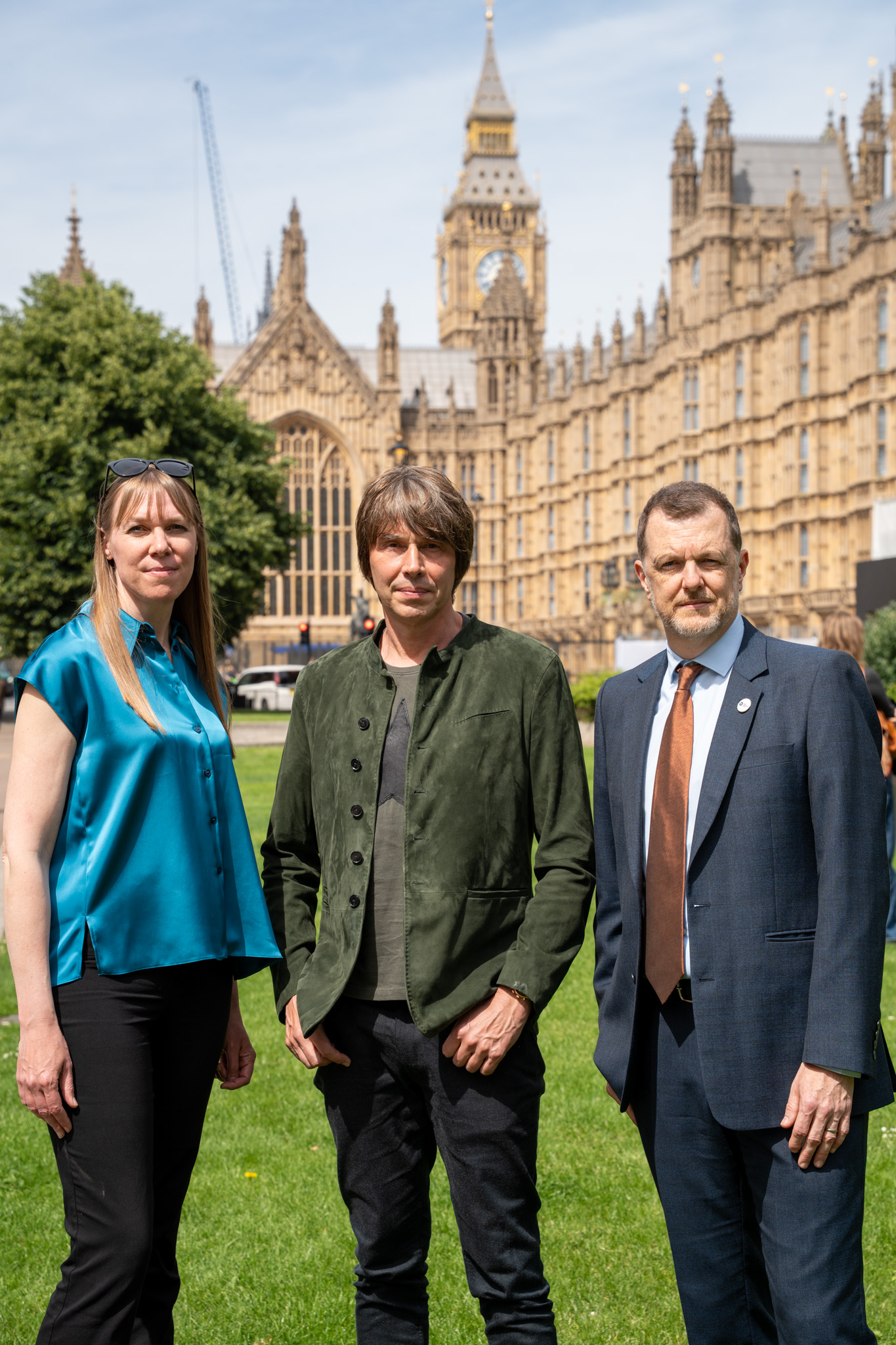
She joined Professor Cox and The Sky at Night presenter Professor Chris Lintott at an MP drop-in session co-organised by the RAS and Clive Lewis, the MP for Norwich South, on Monday 15 June.
Also present were the Astronomer Royal for Scotland, Professor Catherine Heymans, and the President of the RAS, Professor Jim Wild, as well as a mix of early career researchers and senior academics representing astronomy, particle physics and nuclear physics.
Professor Heymans said the biggest budget cuts in a generation could trigger "a cataclysmic and irreversible shock" among UK universities, bringing about "an exodus of the biggest and brightest talent the UK has to offer".
"When it comes to Nobel Prize-winning discoveries and the UK being a scientific giant on the world stage, this short-sighted decision is likely to leave us as a bit-part, minority player in a number of major international projects, with our reputation in tatters," she added.
"Worse still, we risk losing a generation of young scientists, all for the sake of saving less than 1 per cent of the UK Research and Innovation (UKRI) budget."
Professor Wild said: "One problem is that the scale and timing of the proposed cuts are still unclear, as well as how the savings will be spread across successive financial years."
He added: "Separately, our calls for a wider assessment of the inevitable wider societal and economic impact of cuts have also fallen on deaf ears, met instead by an astoundingly complacent response which offers no indication that our concerns are being taken seriously."
A total of 48 UK-funded projects are at risk as a result of the planned cuts, all of which represent UK leadership within large international collaborations that have been designed to lead to breakthrough discoveries.
The Vera Rubin Observatory, the new flagship US facility, is creating the first movie of the Universe, catching the light from exploding stars, belching black holes, and objects cruising through the Solar System. The UK will process 25 per cent of the images and provide data access for 25 countries across the world.
Our window on the energy frontier, the Large Hadron Collider at CERN, is also about to start a major upgrade of both the beams and detectors. The UK is committed to delivering technology upgrades to both ATLAS and CMS, the experiments which discovered the Higgs Boson.
"Reneging on these promises would be a disaster for global particle and astrophysics, destroying our reputation as reliable partners," said Professor Jon Butterworth, of University College London.
"Further reduction of resources to analyse the data will relegate us, risking us missing out on future high-profile discoveries."
ENDS
- This news story was updated on 17 June 2026 in response to changing information supplied by STFC. We removed the statement ‘These concerns are based on the assumption that STFC must reduce spending by £162 million by the end of the Spending Review. Of this, £54 million (just 0.2 per cent of the total UKRI budget) would fall on astronomy, particle physics and nuclear physics.’, as the total amount of STFC savings required within the four-year Spending Review period is still unclear and we are seeking urgent clarification on this.
Media contacts
Sam Tonkin
Royal Astronomical Society
Mob: +44 (0)7802 877 700
Notes for editors
About the Royal Astronomical Society
The Royal Astronomical Society (RAS), founded in 1820, encourages and promotes the study of astronomy, solar-system science, geophysics and closely related branches of science.
The RAS organises scientific meetings, publishes international research journals, recognises outstanding achievements by the award of medals and prizes, maintains an extensive library, supports education through grants and outreach activities and represents UK astronomy nationally and internationally. Its more than 4,000 members (Fellows), a third based overseas, include scientific researchers in universities, observatories and laboratories as well as historians of astronomy and others.
The RAS accepts papers for its journals based on the principle of successful peer review, following which experts on the Editorial Boards accept the papers for publication. The Society issues press releases based on a similar principle, but the organisations and scientists concerned have overall responsibility for their content.
Keep up with the RAS on Instagram, Bluesky, LinkedIn, Facebook and YouTube.
Download the RAS Supermassive podcast