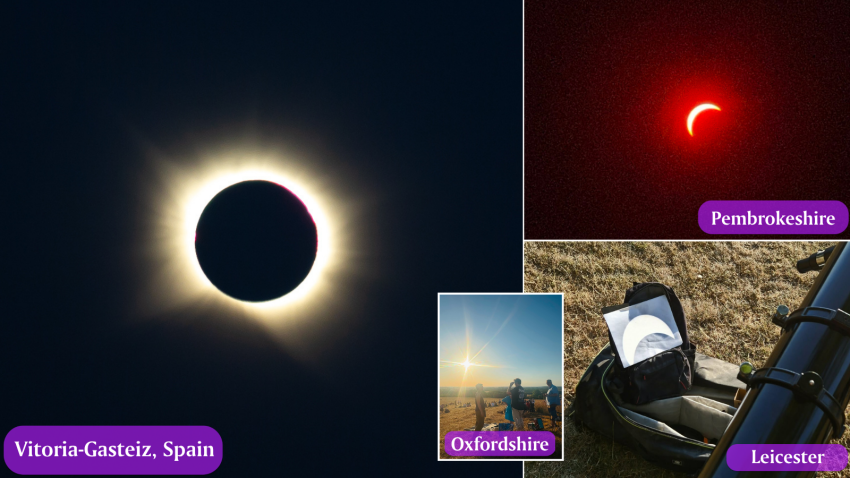
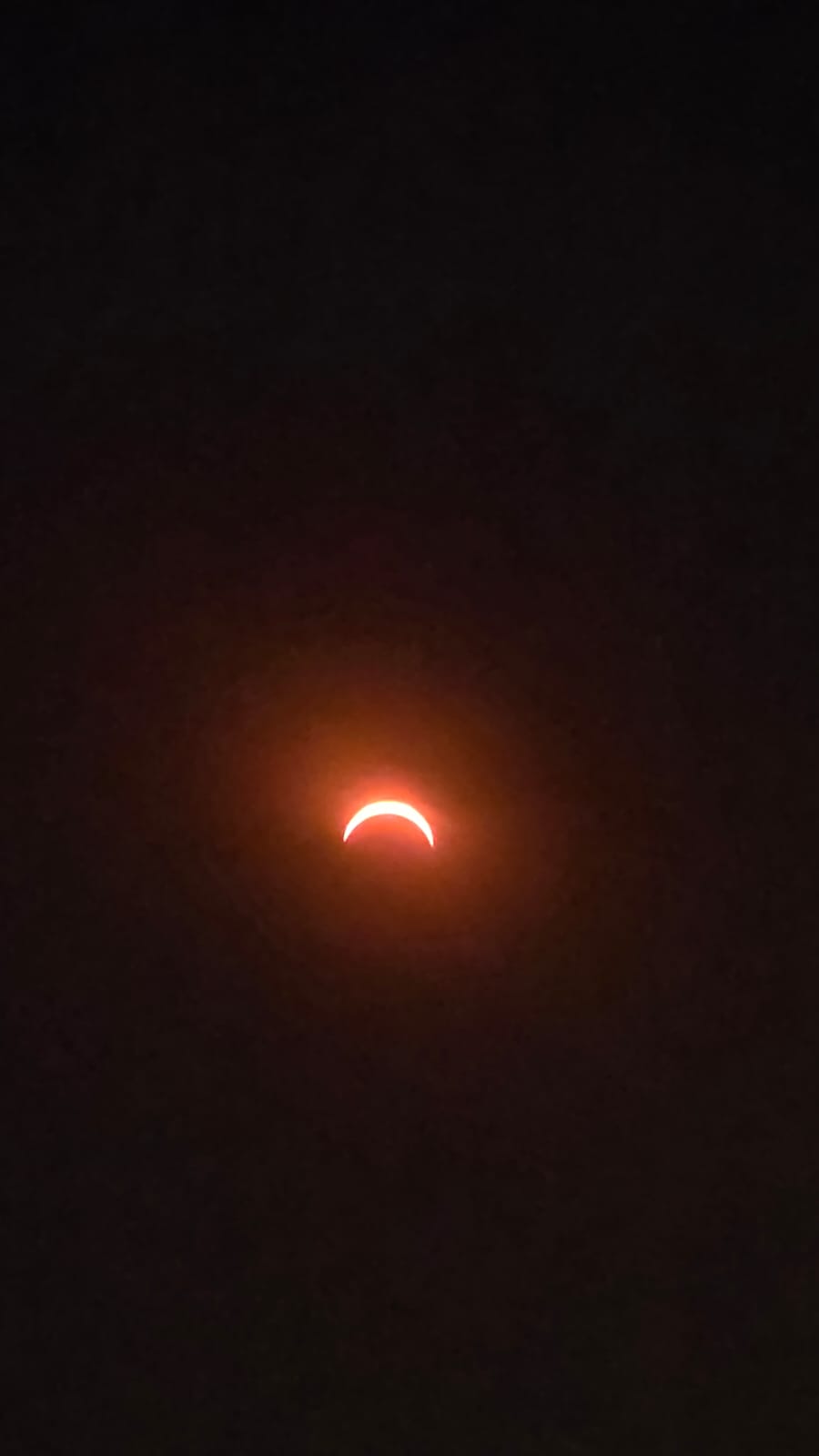
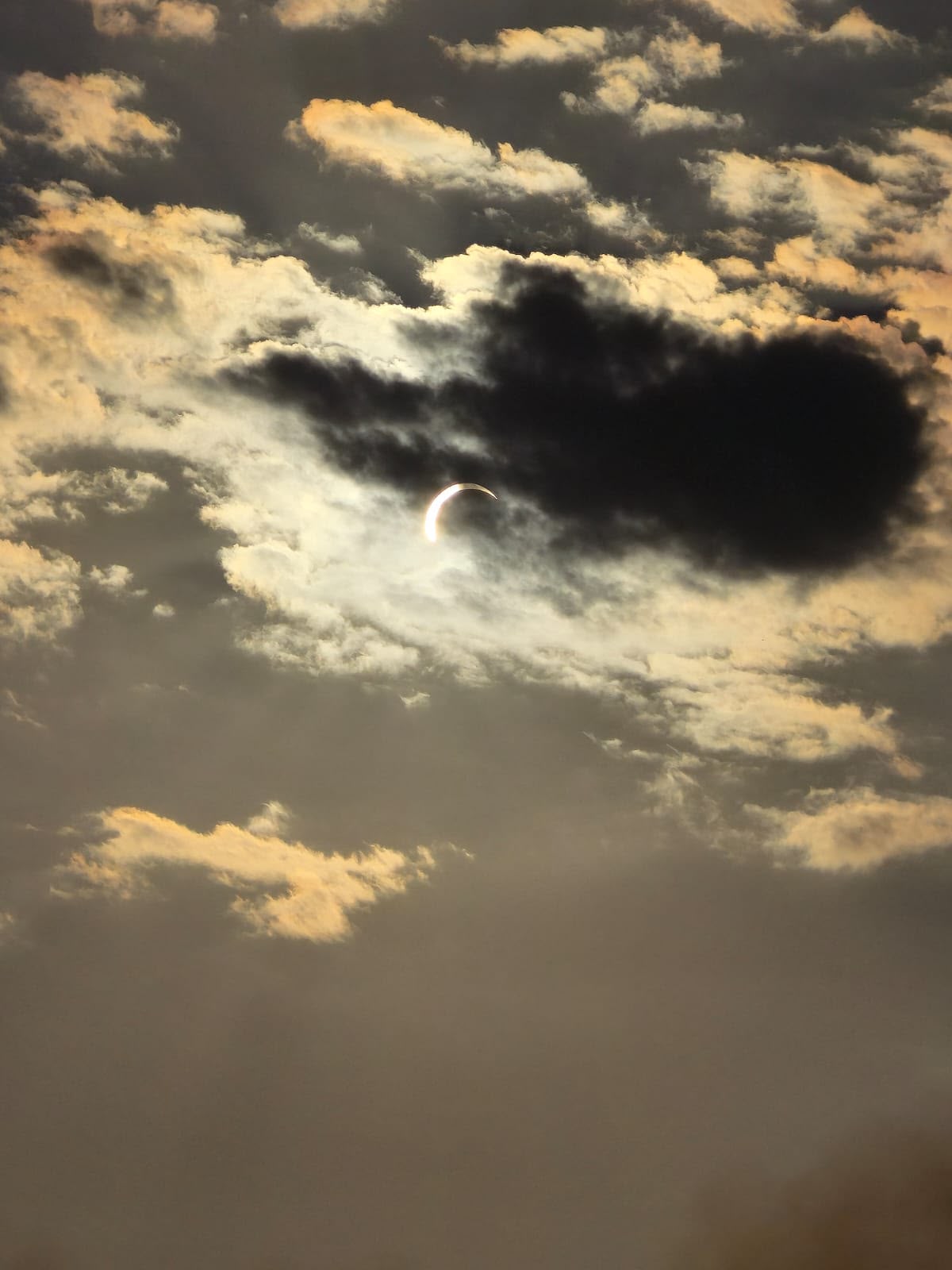
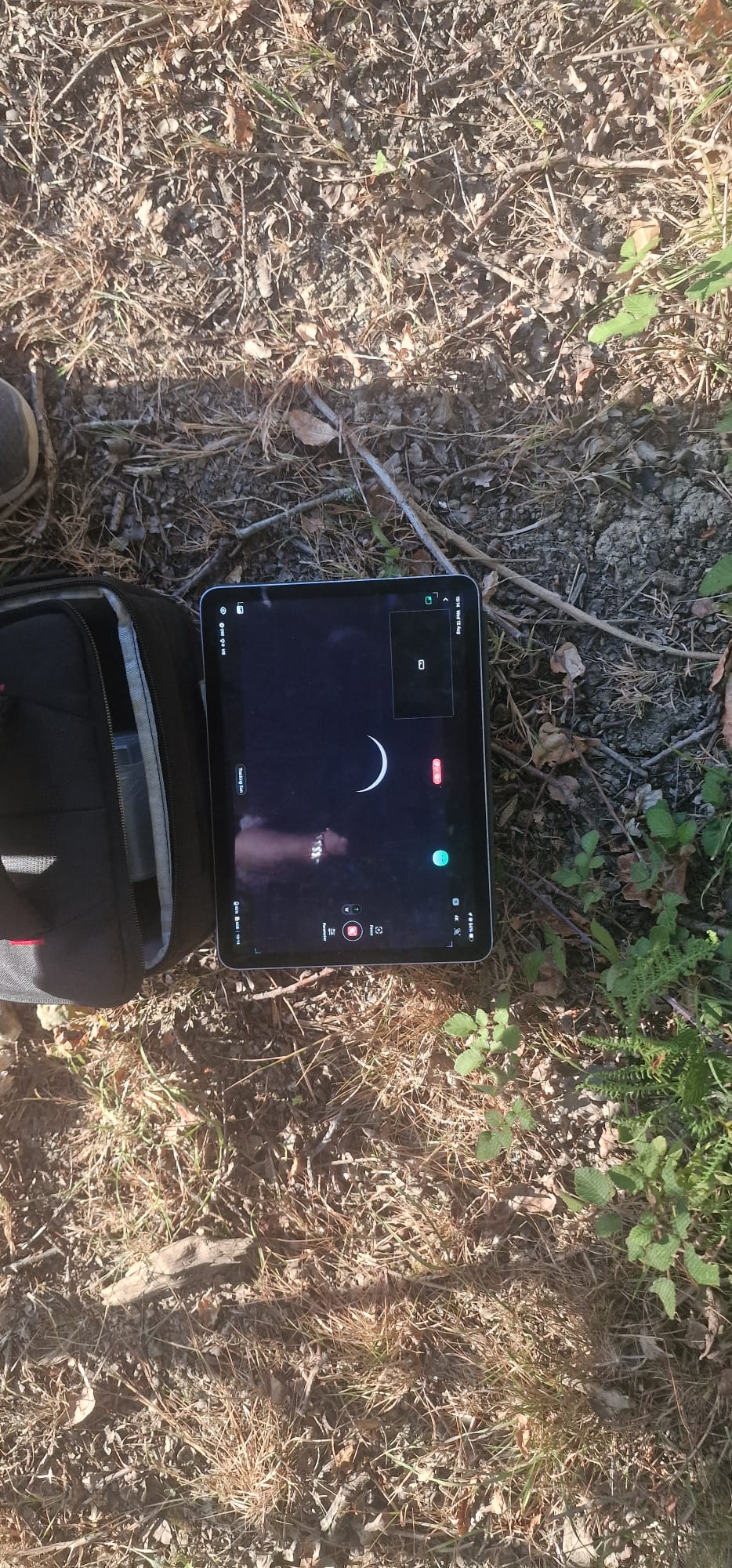
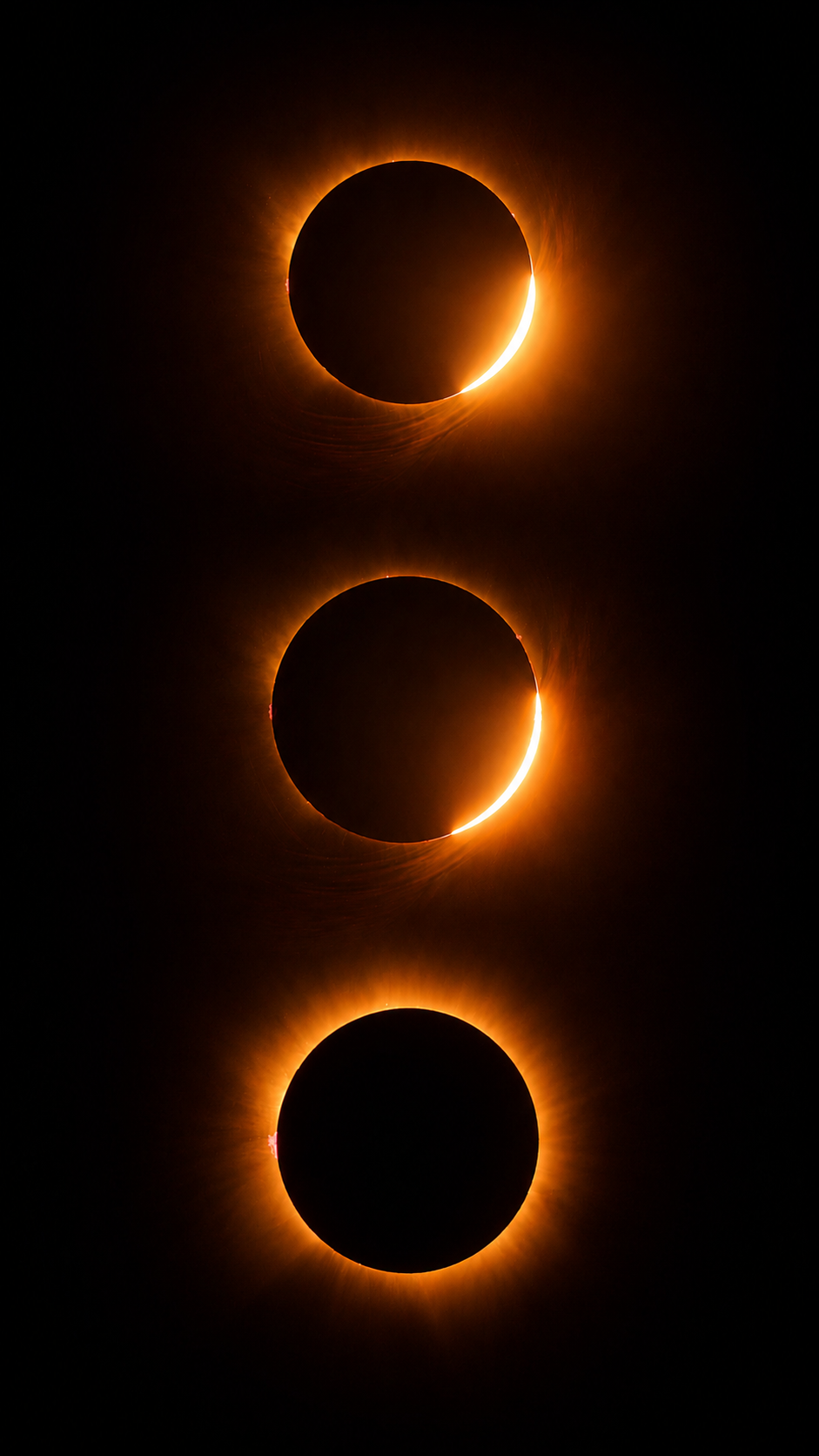
Millions of people across the UK and Europe enjoyed the most spectacular solar eclipse in a generation on Wednesday evening (12 August).
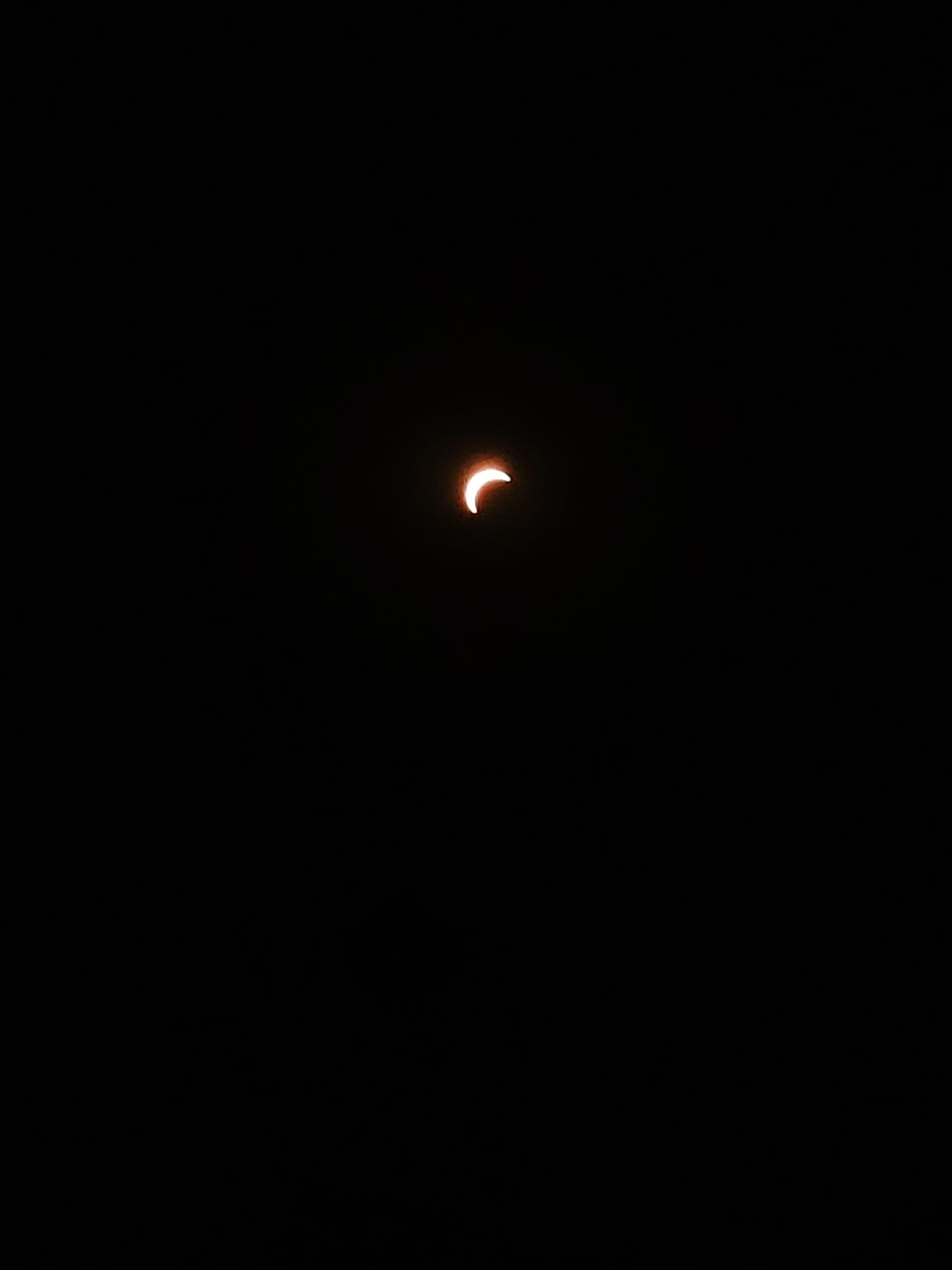
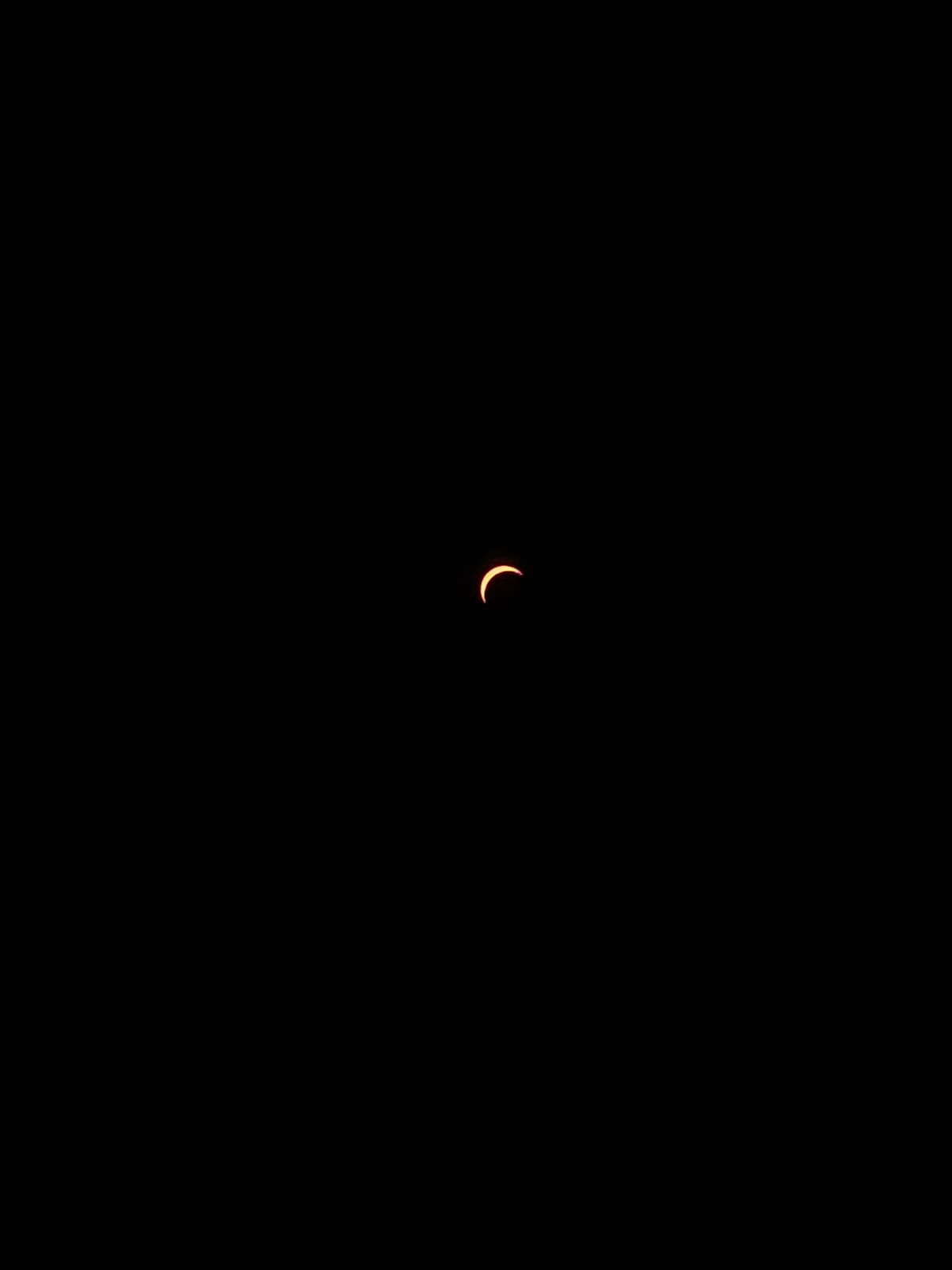
The UK experienced its best solar eclipse in nearly 30 years, with most of the country treated to more than 90 per cent of the Sun being covered by the Moon at the peak shortly after 19:00 BST.
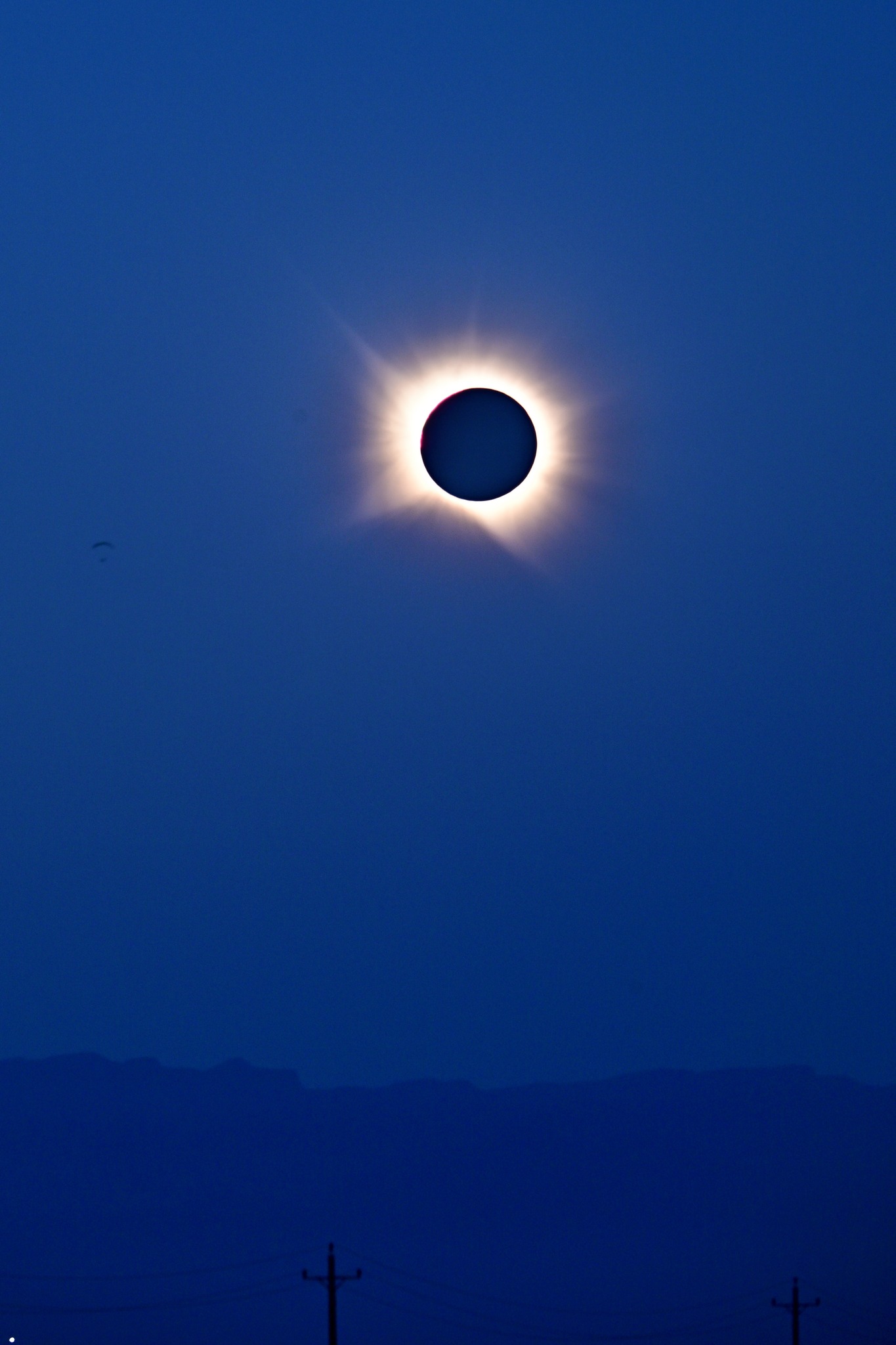
Parts of Spain, Iceland, Portugal and Greenland witnessed a total solar eclipse, a spectacular astronomical phenomenon watched by residents and tourists who had travelled there especially to see it.
The partial eclipse began at about 18:00 BST in northern Scotland and just before 18:20 on the south coast of England.
A solar eclipse occurs when the Moon passes between the Sun and Earth, causing our lunar satellite to cast a shadow on Earth.
The last partial solar eclipse in the UK was on 29 March 2025 – but on this occasion only around 30-40 per cent of the Sun’s light was blocked by the Moon at the maximum. Last night it was around 90 per cent or slightly higher, which was the most coverage over the whole of the UK since 1999 when Cornwall in the south west of England witnessed totality.
Did you get any pictures of the solar eclipse, or of yourself watching it? We’d love to see them and feature them on this page. Email them to press@ras.ac.uk
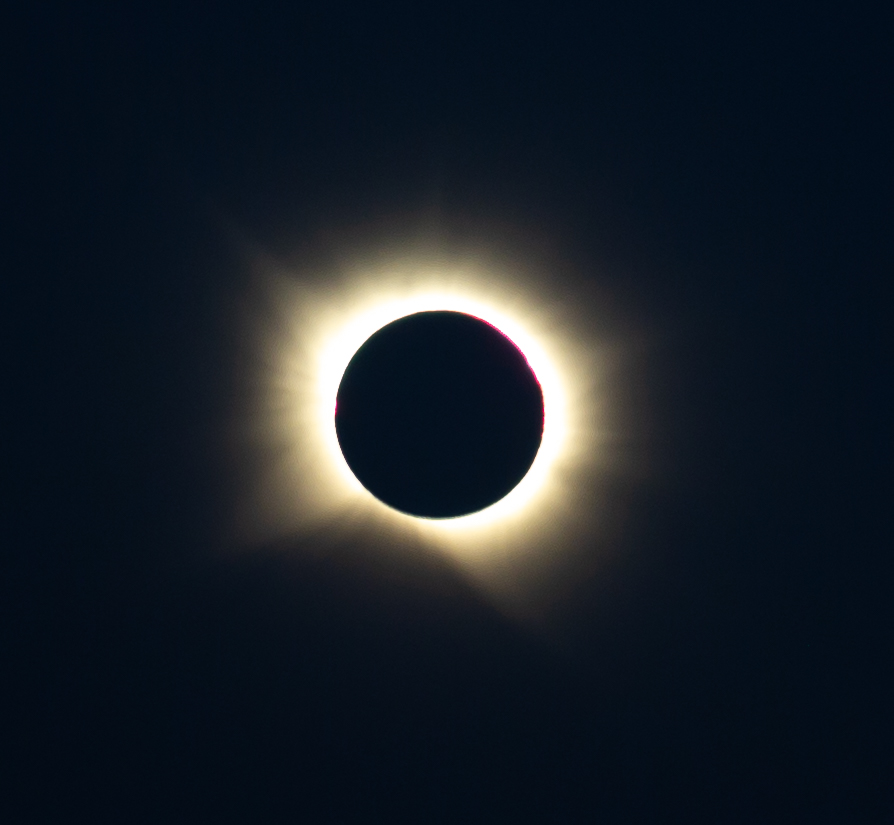
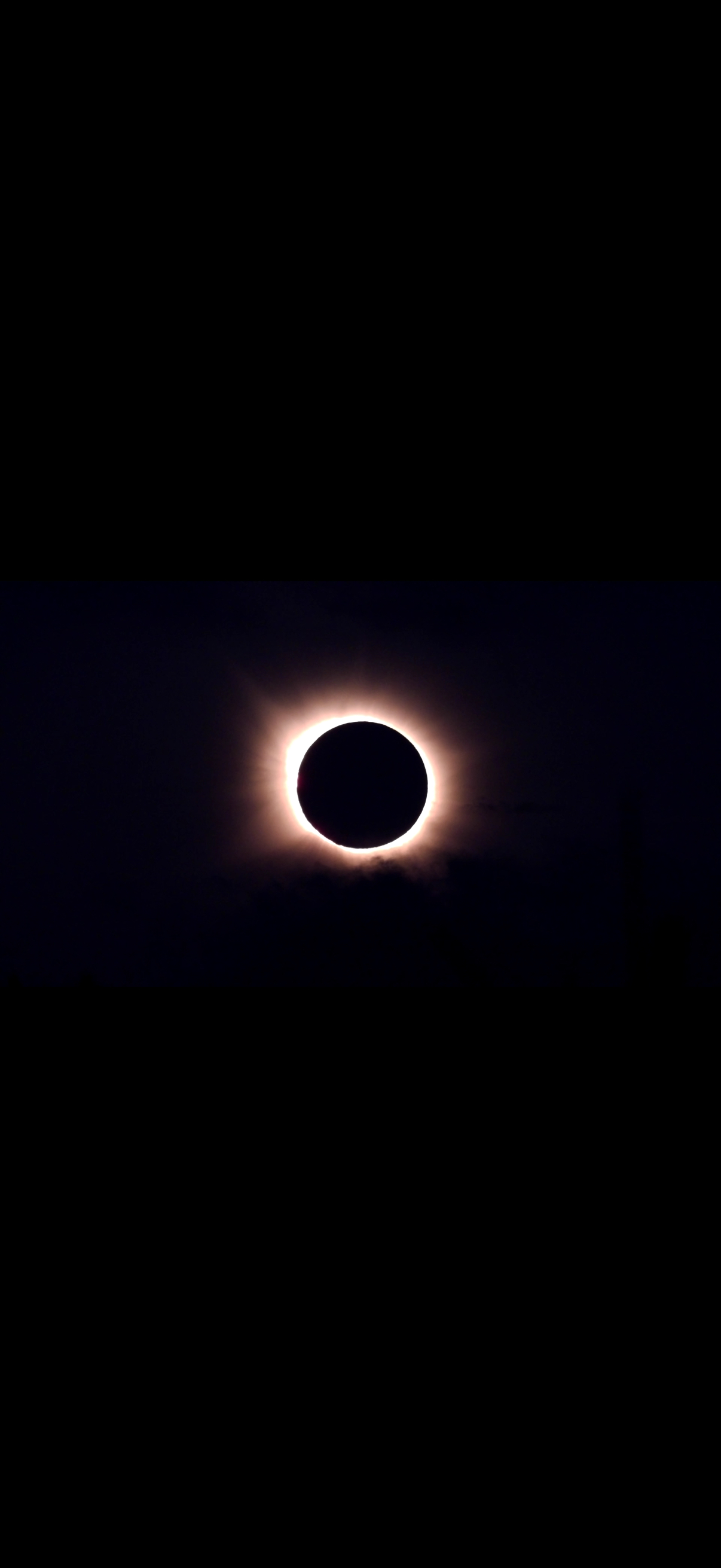
The total solar eclipse visible from Vitoria-Gasteiz in Spain.
Mike Peel
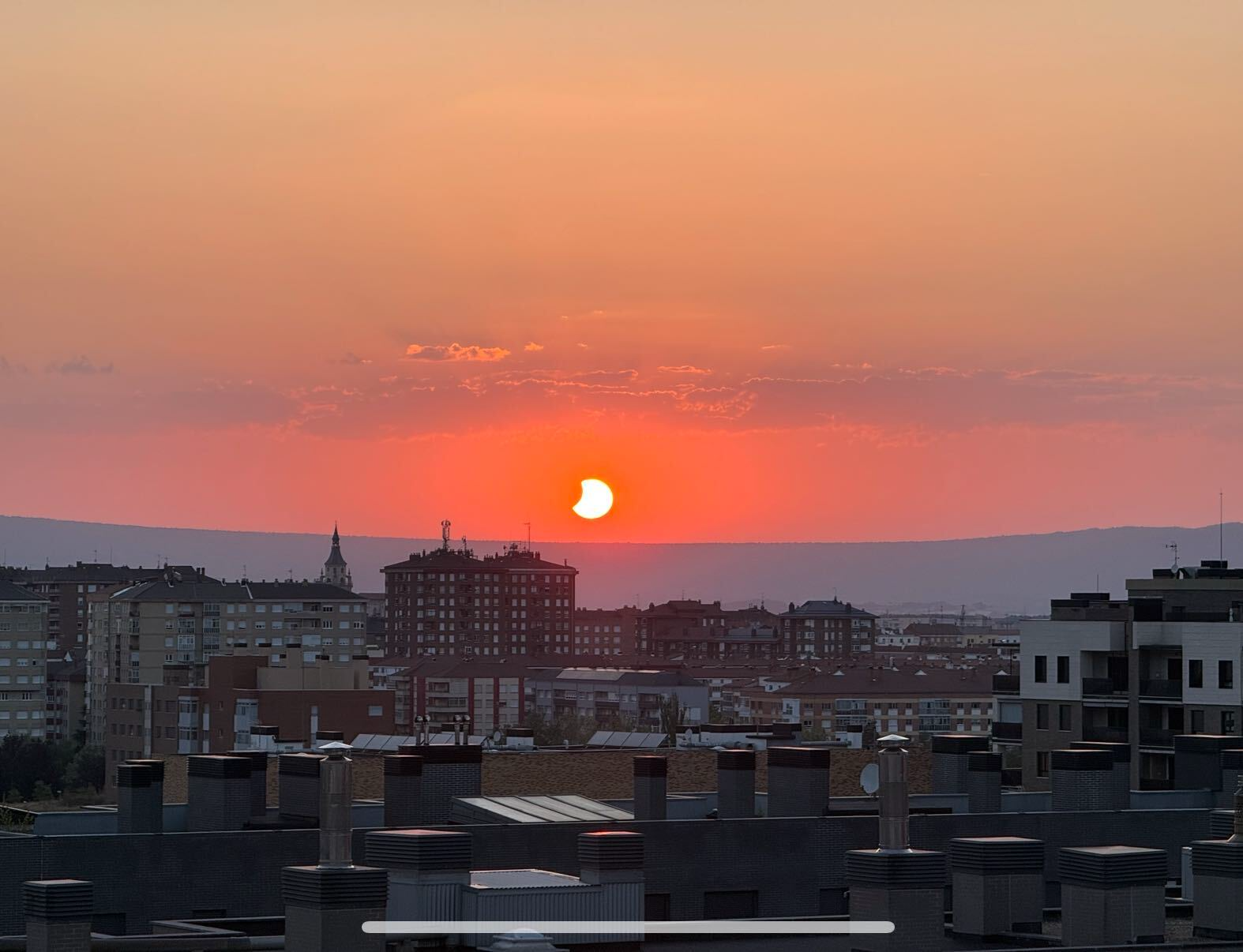
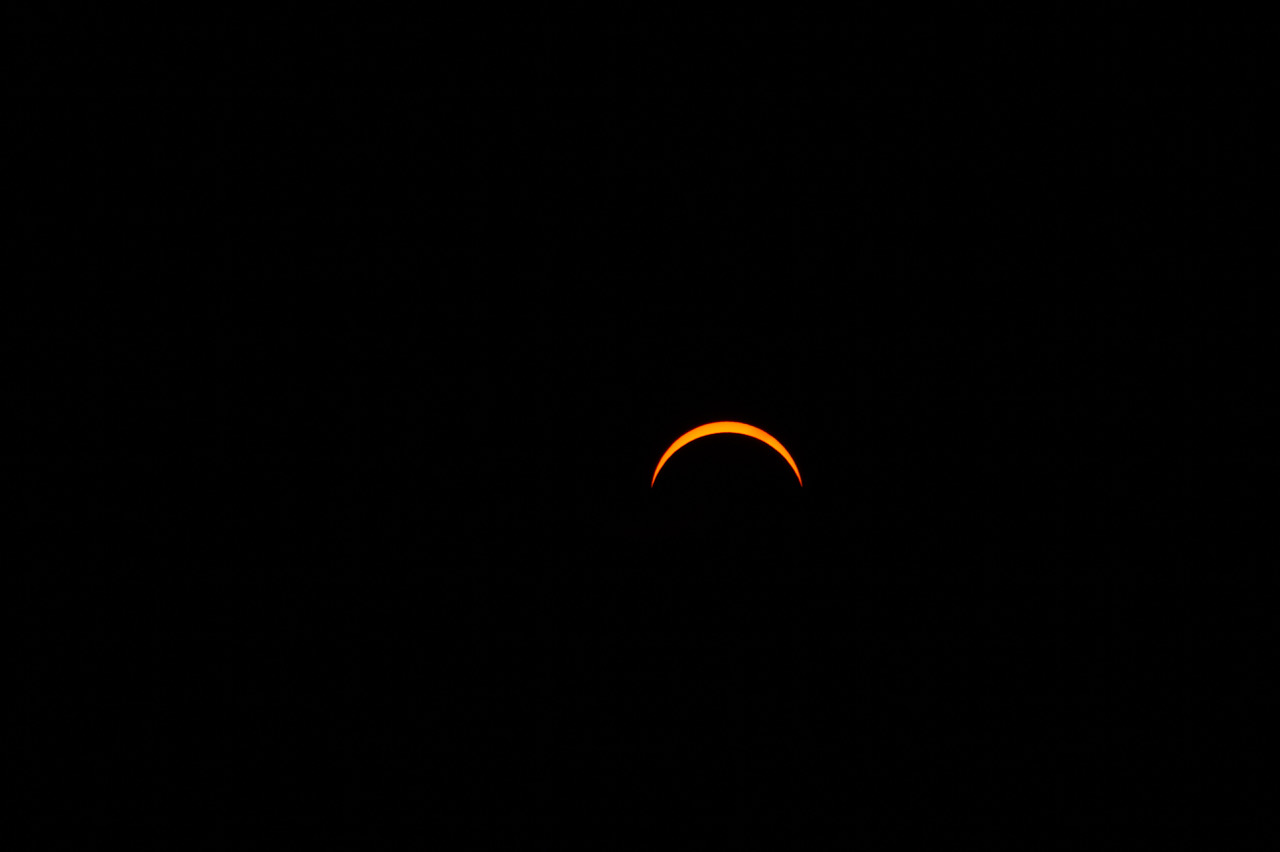
Eclipse sunset: Dr Mike Peel also took this image of the solar eclipse from Vitoria-Gasteiz in Spain.
Mike Peel
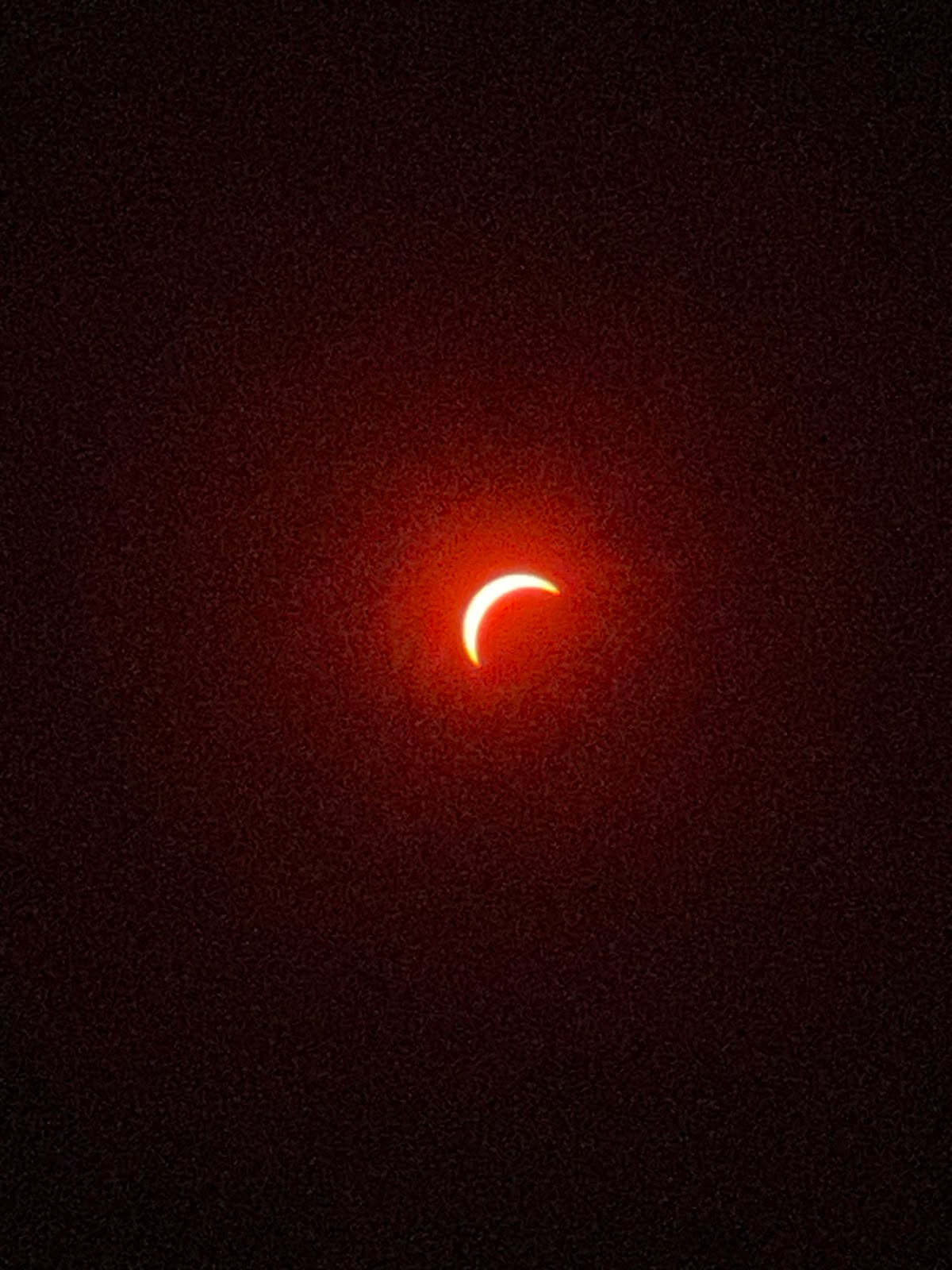
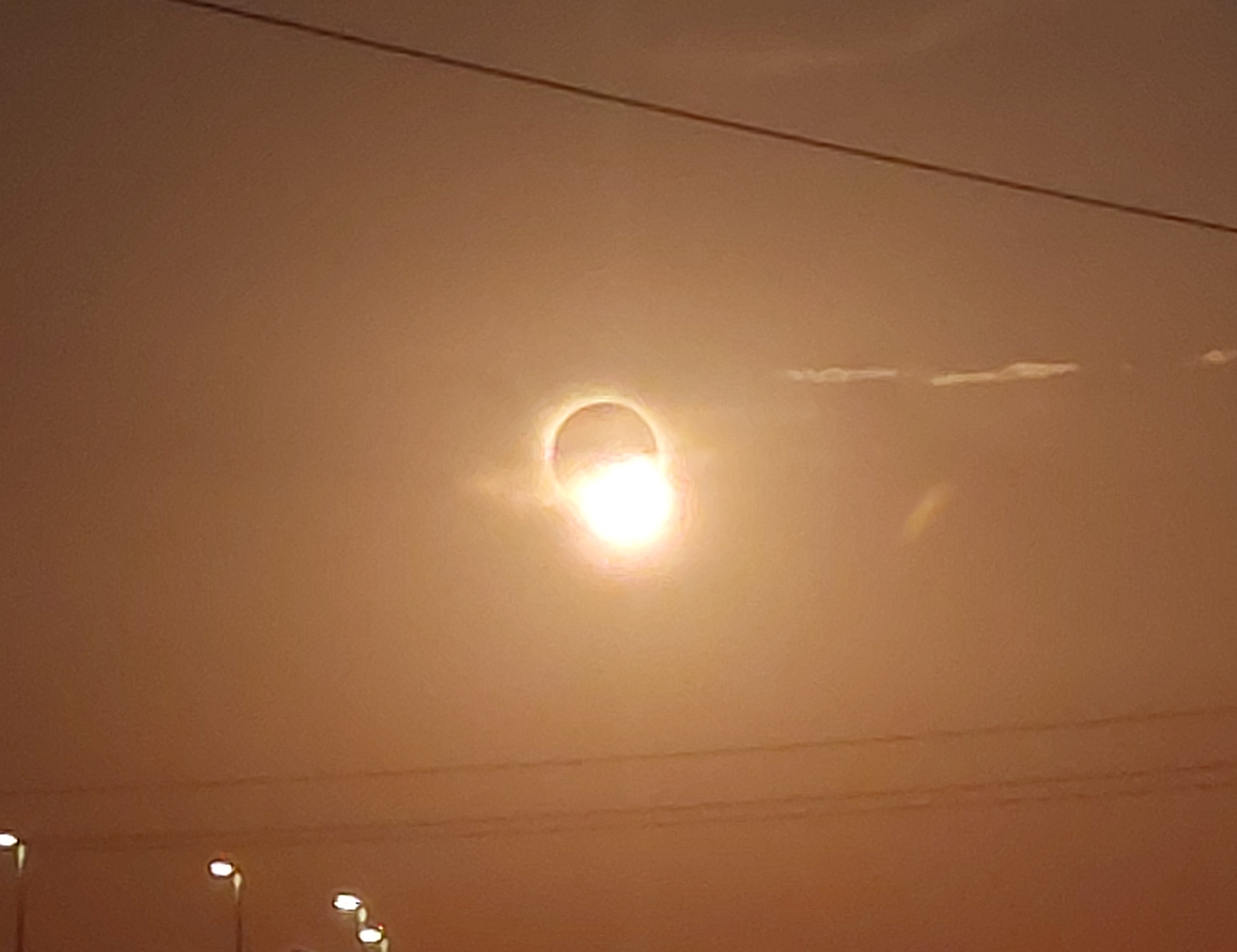
Rachel Knox from Narberth in Pembrokeshire took this image of the solar eclipse.
Rachel Knox
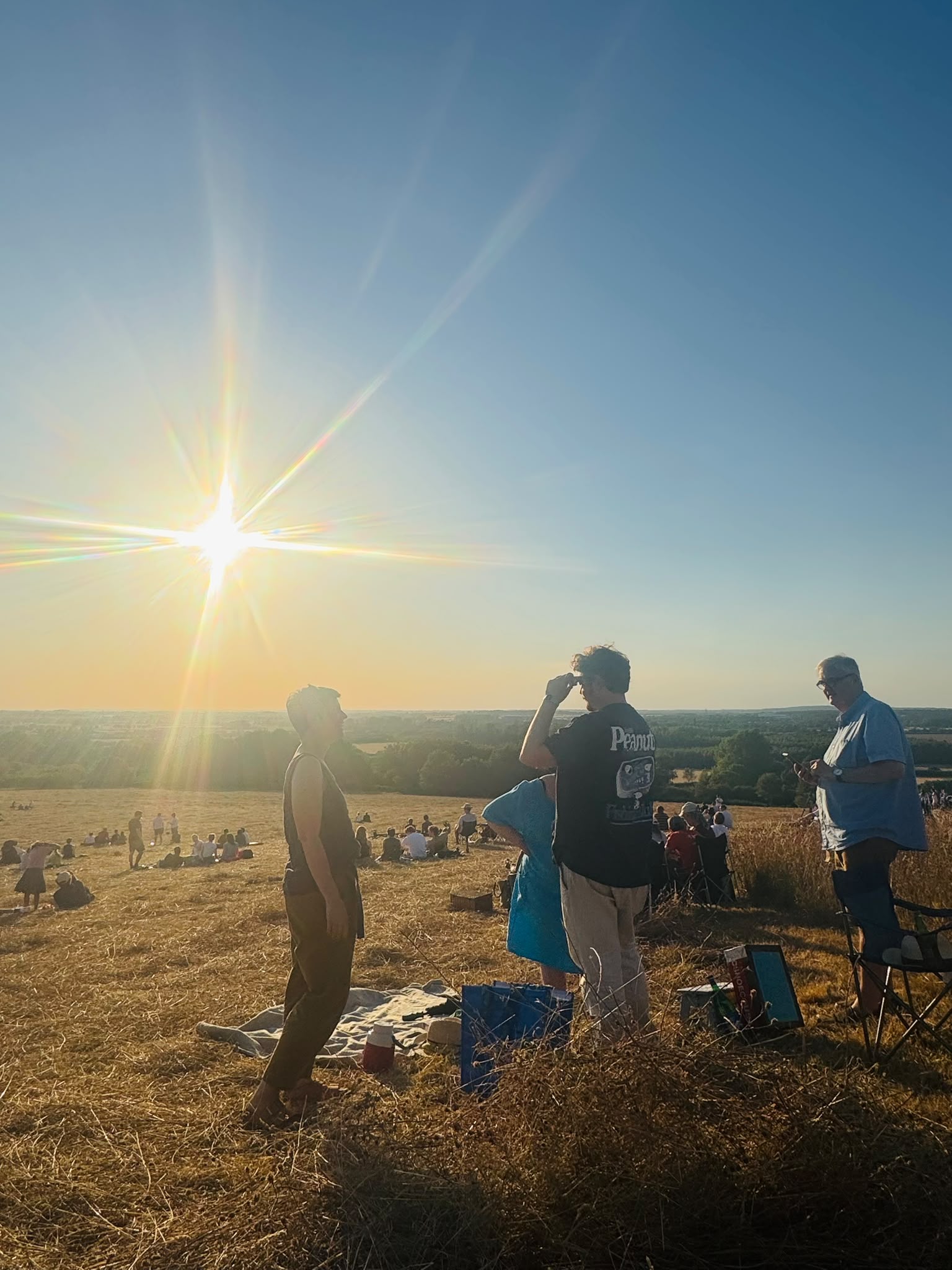
Pete Gardom, Alex Brooks, Tim Gardom and Alison Gardom watch the solar eclipse from Wittenham Clumps in Oxfordshire.
Lucinda Offer
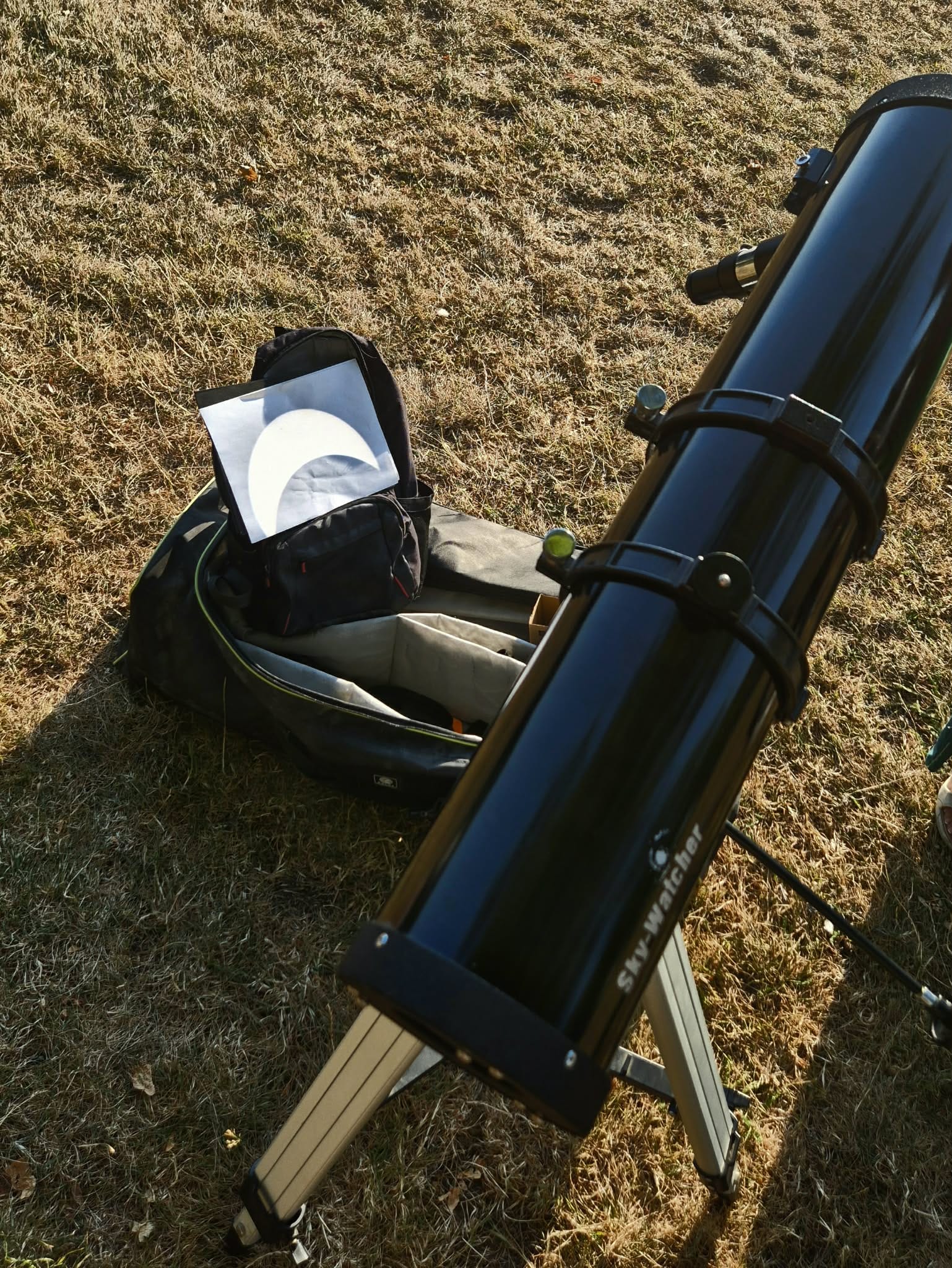
Spencer Tooke projected an image of the solar eclipse using his telescope in Leicester.
Spencer Tooke
Soheb Mandhai took this picture from Victoria Park next to the University of Leicester campus.
Soheb Mandhai
Another image from Fellow of the Royal Astronomical Society Soheb Mandhai.
Soheb Mandhai
Cambridge University astrophysicist Hannah Petrovic took this image from West Drayton.
Hannah Petrovic
Simon MacKay got a picture of the solar eclipse over Maesteg in Wales.
Simon MacKay
Dr Robert Massey's image of the eclipse, taken from Lewes In East Sussex.
Dr Robert Massey
Solarigraphy photographer Diego Calvin Lopez captured these images alongside a team that included RAS Fellow Abrar Aljamaan in Maderuelo in Spain.
Diego Calvin Lopez
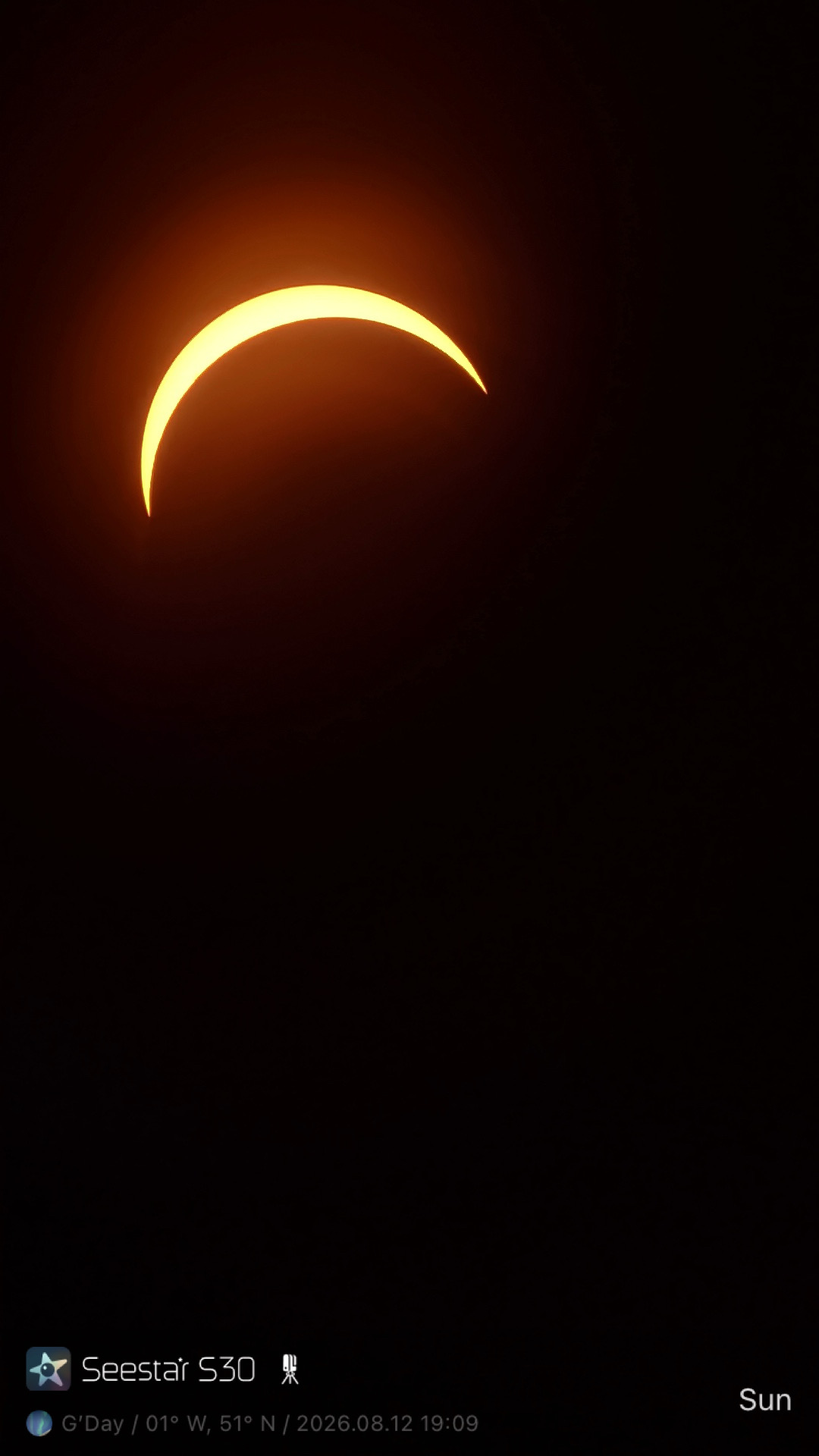
Geraint Day captured this image from Wroughton, Wiltshire, with a ZWO Seestar S30.
Geraint Day
RAS Fellow Linda Marques took this image from her front garden in Newport on the Isle of Wight using a 300mm lens and a Thousand Oaks solar filter.
Linda Marques
Darren Groombridge captured images from Valencia in Spain taken from an iPhone and a Dwarf3 smart telescope.
Darren Groombridge
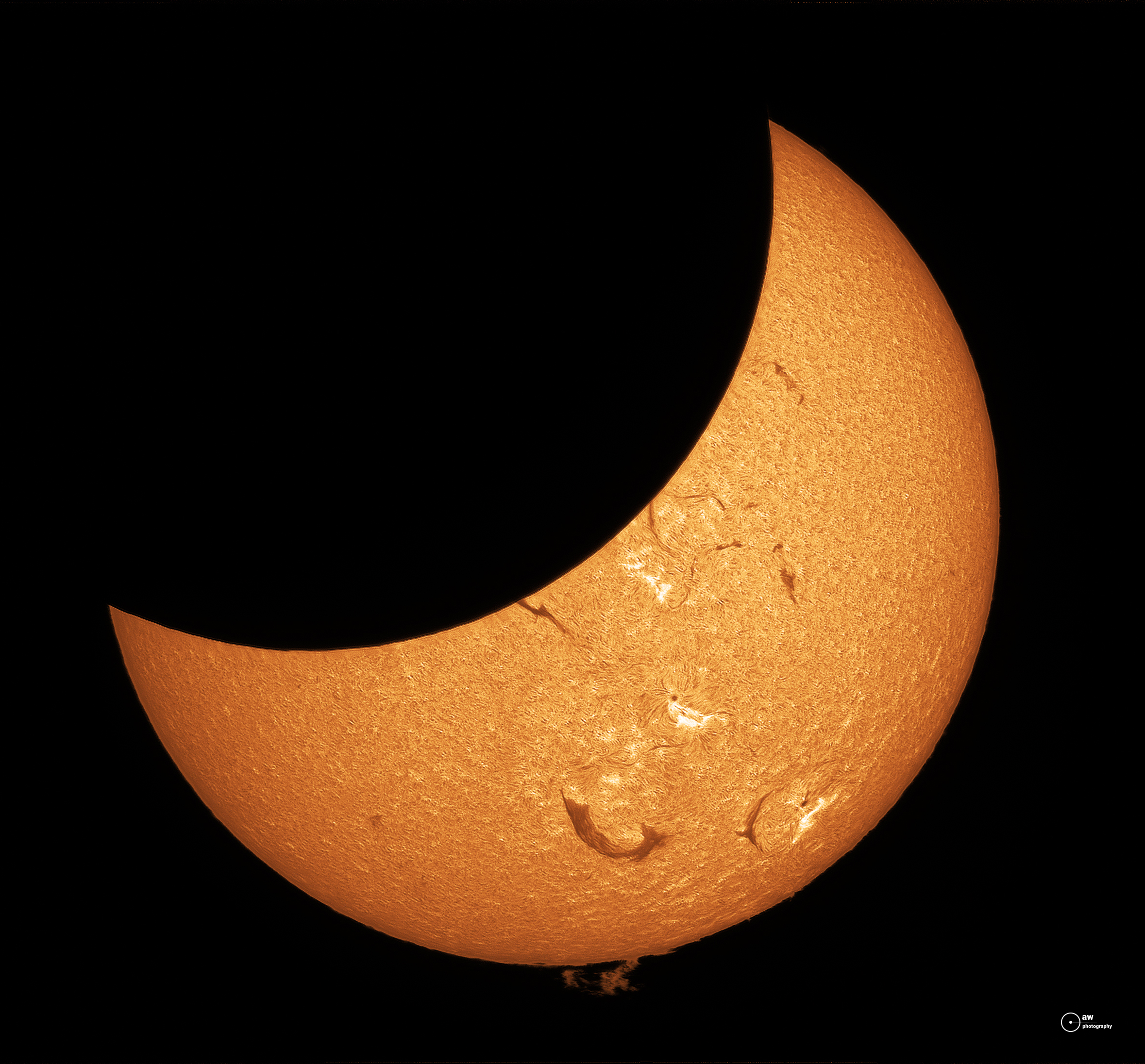
Alastair Woodward caught a glimpse of the partial solar eclipse from Derby. The image is comprised of a stack of 50 per cent best frames from 30 seconds of video footage.
Alastair Woodward
Ian Howarth witnessed totality in Ebro Delta in Spain.
Ian Howarth
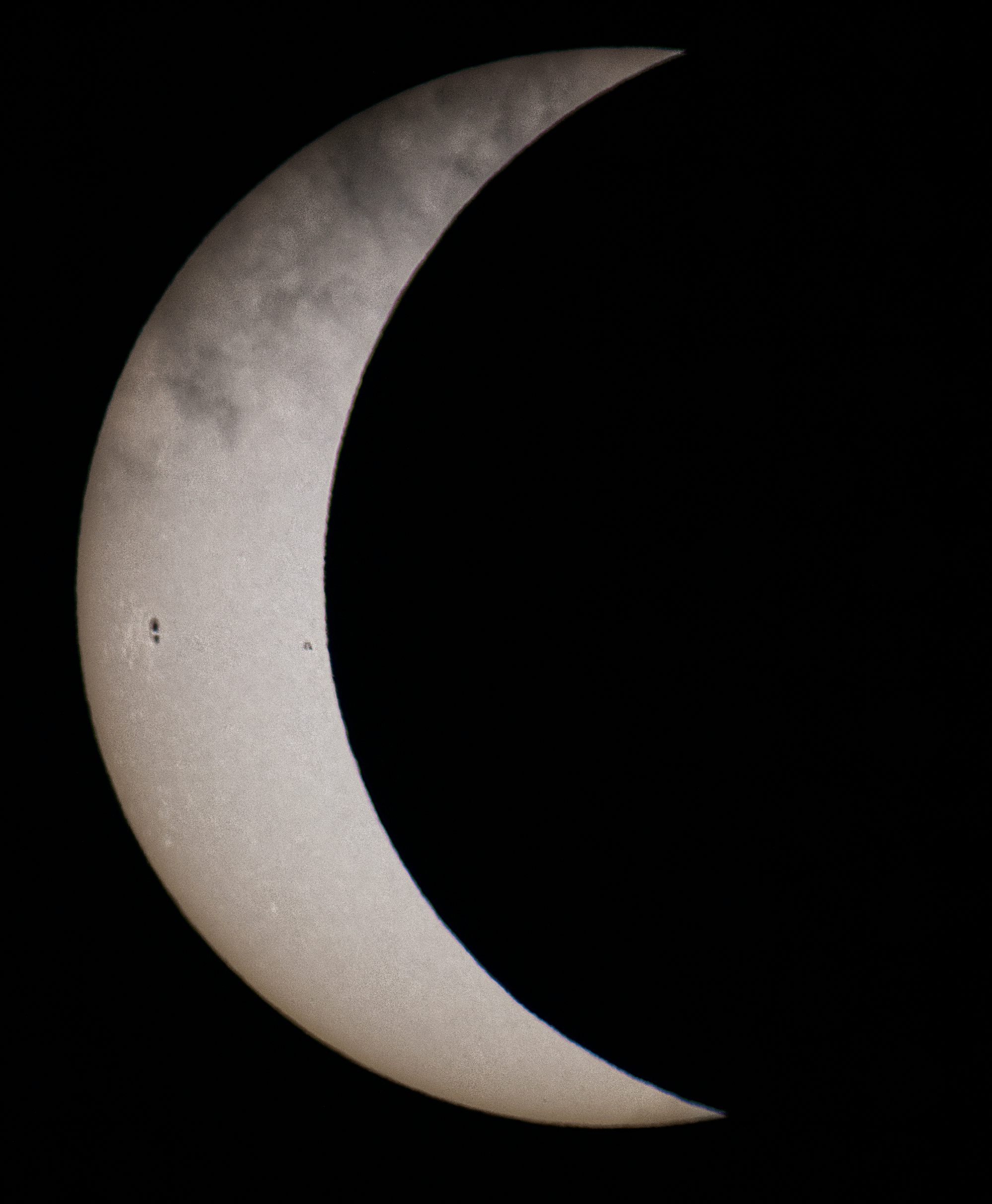
RAS Fellow Dr Keith Moseley took this image of the eclipse with sunspots from Monmouth, Wales using a refractor, a Herschel wedge and a DSLR.
Dr Keith Moseley
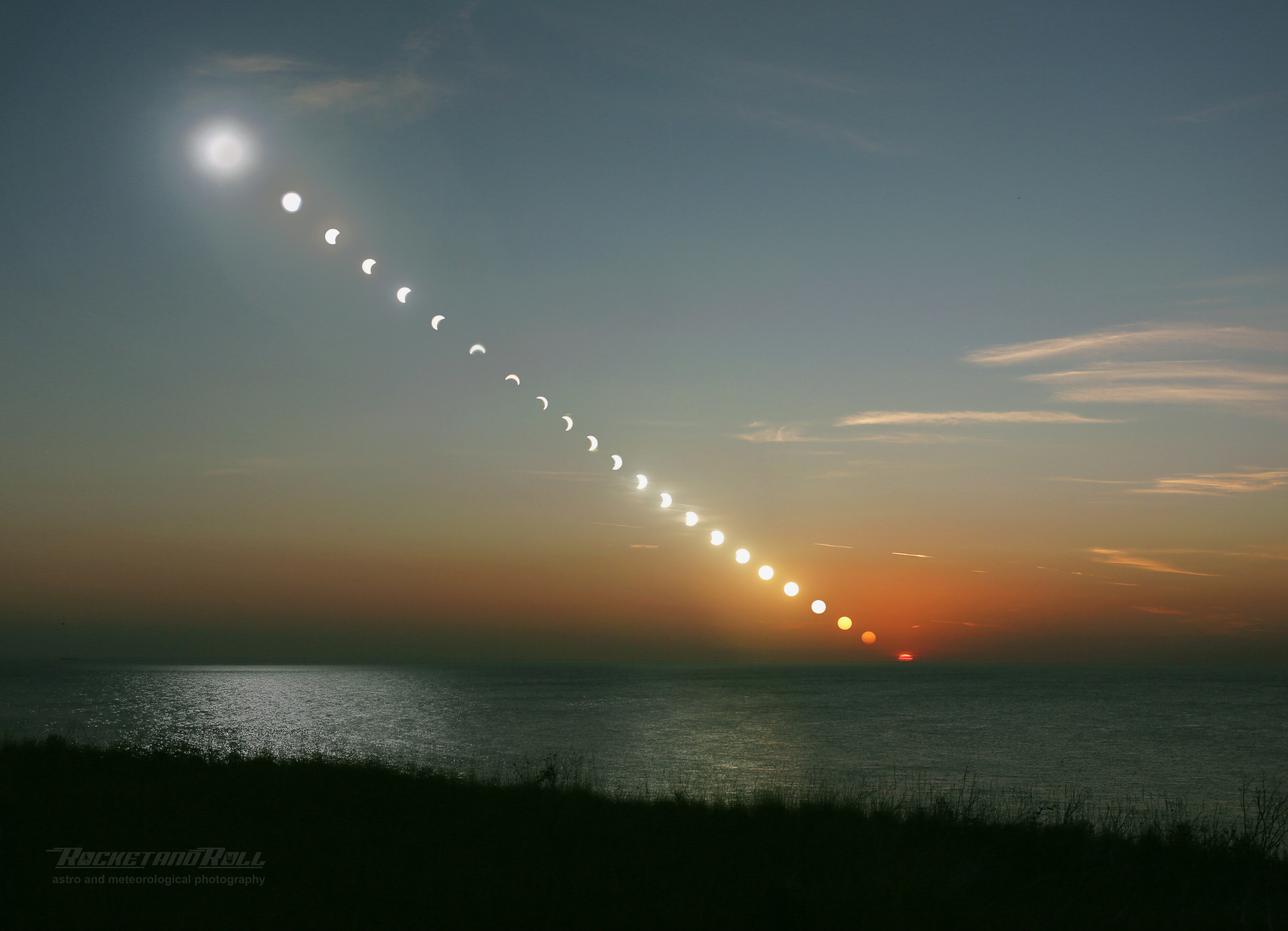
Ben Jarvis captured the full transit of the eclipse as a timelapse from a clifftop at Hunstanton in North Norfolk.
Ben Jarvis
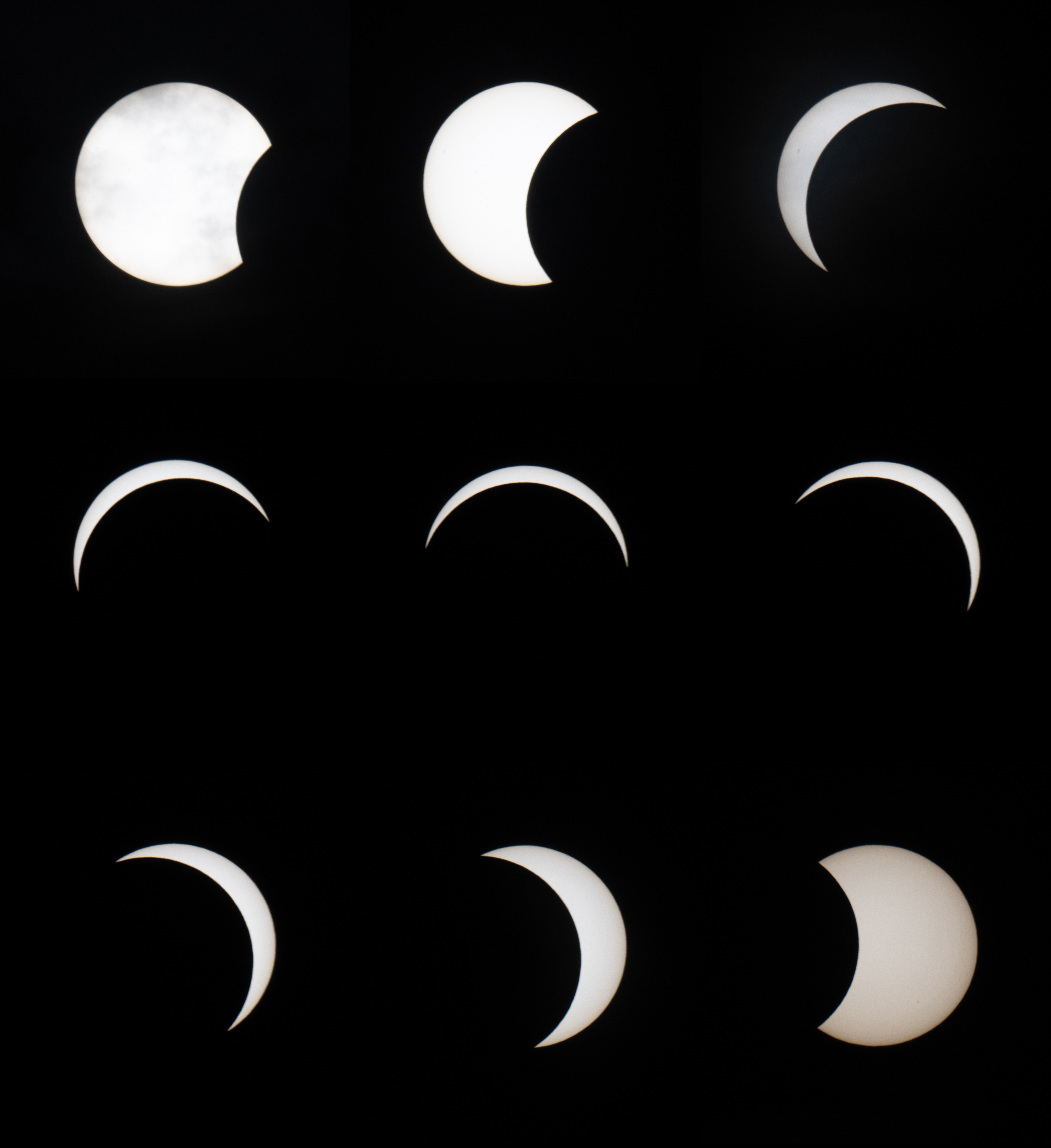
RAS Fellow Mark Wrigley took these images with a Canon M6 II with a 500mm Hanimex mirror lens with a Solar filter and lens hood from Otley, West Yorkshire.
Mark Wrigley
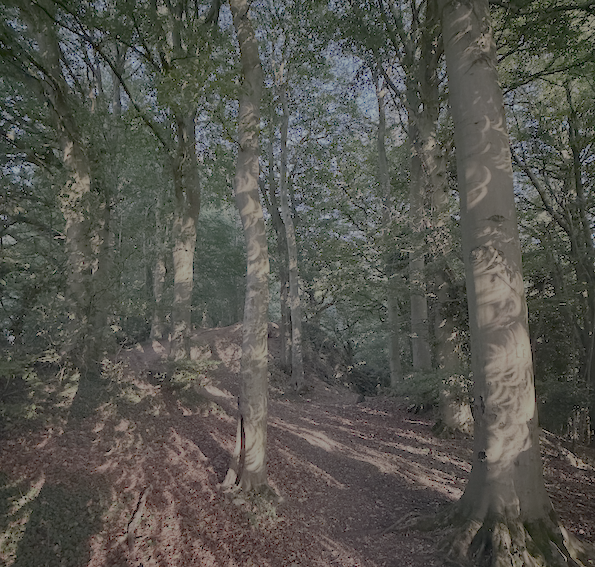
This beautiful image by Krista Woodman shows repeated crescent images of the eclipsed Sun projected across the forest floor and surrounding beech trunks – particularly visibly on the large trunk on the right of the photograph.
Krista Woodman
Ruth Saunders took these pictures on a footpath between Benicalap and Poble Nou in Valencia.
Ruth Saunders
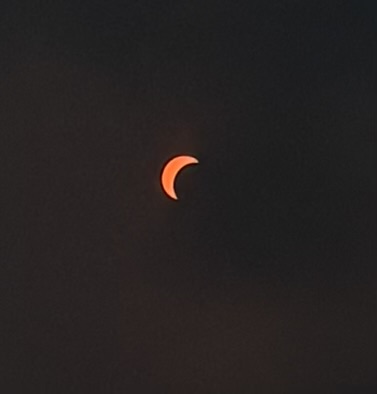
Astronomy GCSE student Rayan Al-Sadi was camping in the Peak District and managed to capture this image of the partial solar eclipse.
Rayan Al-Sadi
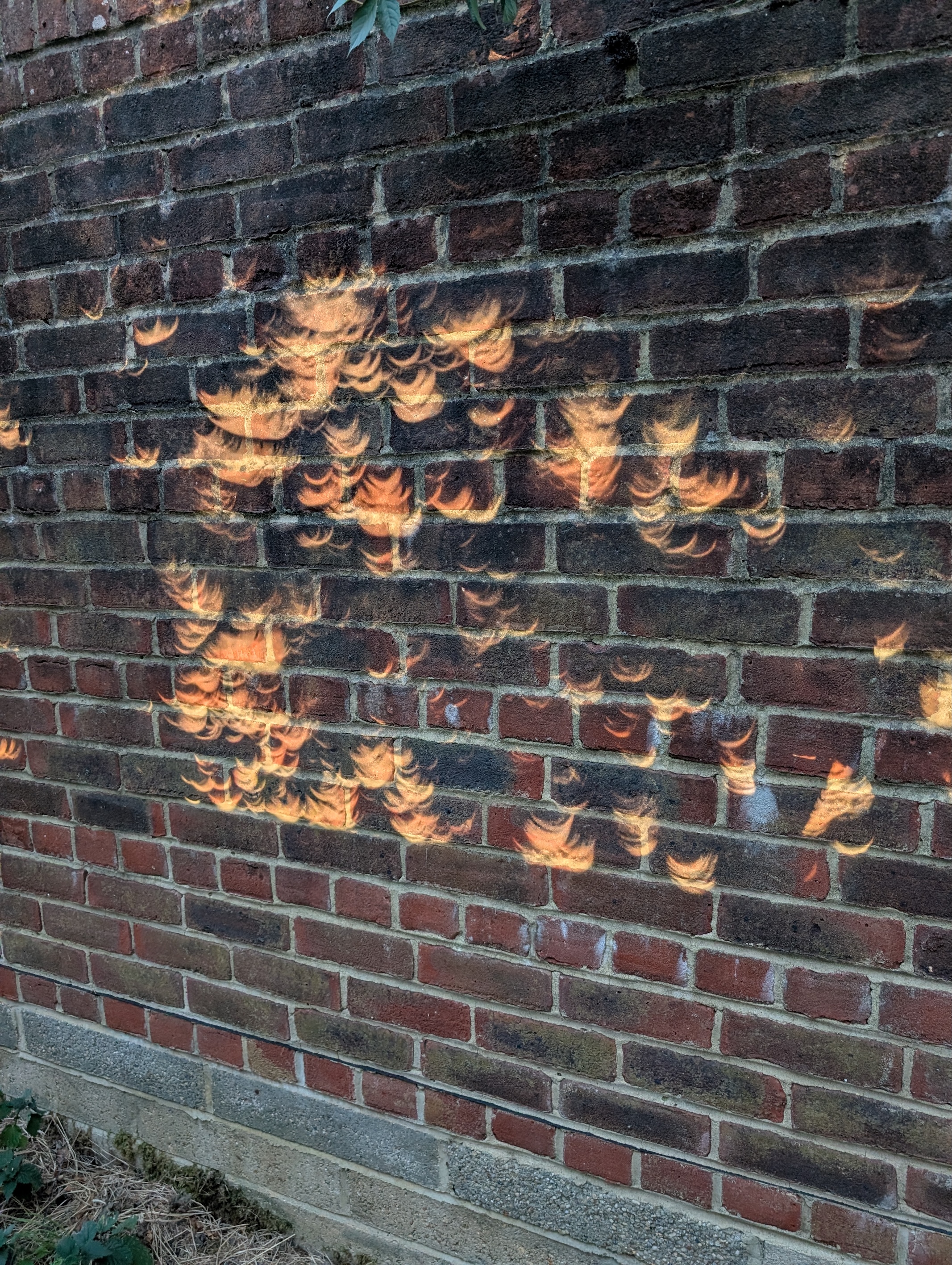
Paul Hindle captured this projection of the partial solar eclipse at its peak in Lancing, West Sussex.
Paul Hindle