
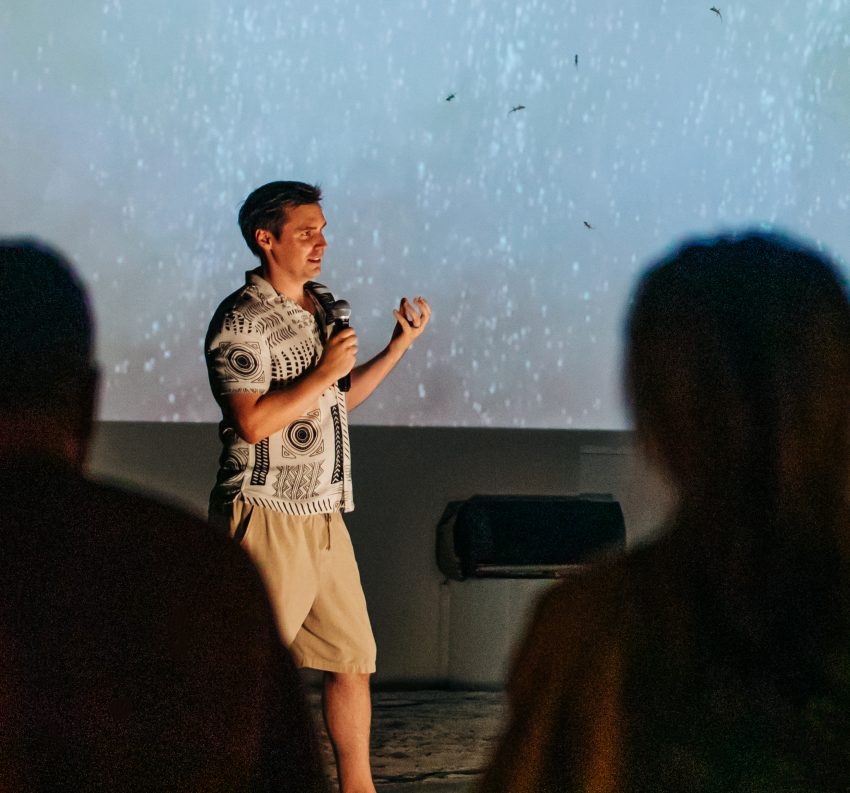

The Royal Astronomical Society (RAS) would like to congratulate Fellow Dr James O’Donoghue on receiving one of US astronomy's most prestigious awards.
Dr O'Donoghue, from the University of Reading, was awarded the 2026 Carl Sagan Medal by the American Astronomical Society (AAS). The prize honours outstanding communication by an active planetary scientist to the general public.
He has produced more than 100 educational animations on space, which have been viewed more than 400 million times around the world.
Last year Dr O'Donoghue also helped organise the annual stargazing event 'Observe the Moon Night' at the University of Reading, which was supported by the RAS.
"As a huge fan of the wide-ranging outreach work of Dr Sagan, which he undertook while an active planetary scientist, I was both surprised and delighted to hear the news that I'd won the Carl Sagan Medal [for Excellence in Public Communication in Planetary Science]," he said.
"My aim has always been to show the world the scale and mechanics of the Solar System, as I see it in my head, which I could finally do through animations.
"Generations of scientists have worked on producing a fantastic understanding of our corner of the universe, but so many people know very little about their place in space.
"Good science communication ensures that what science produces does not stay in the dark."
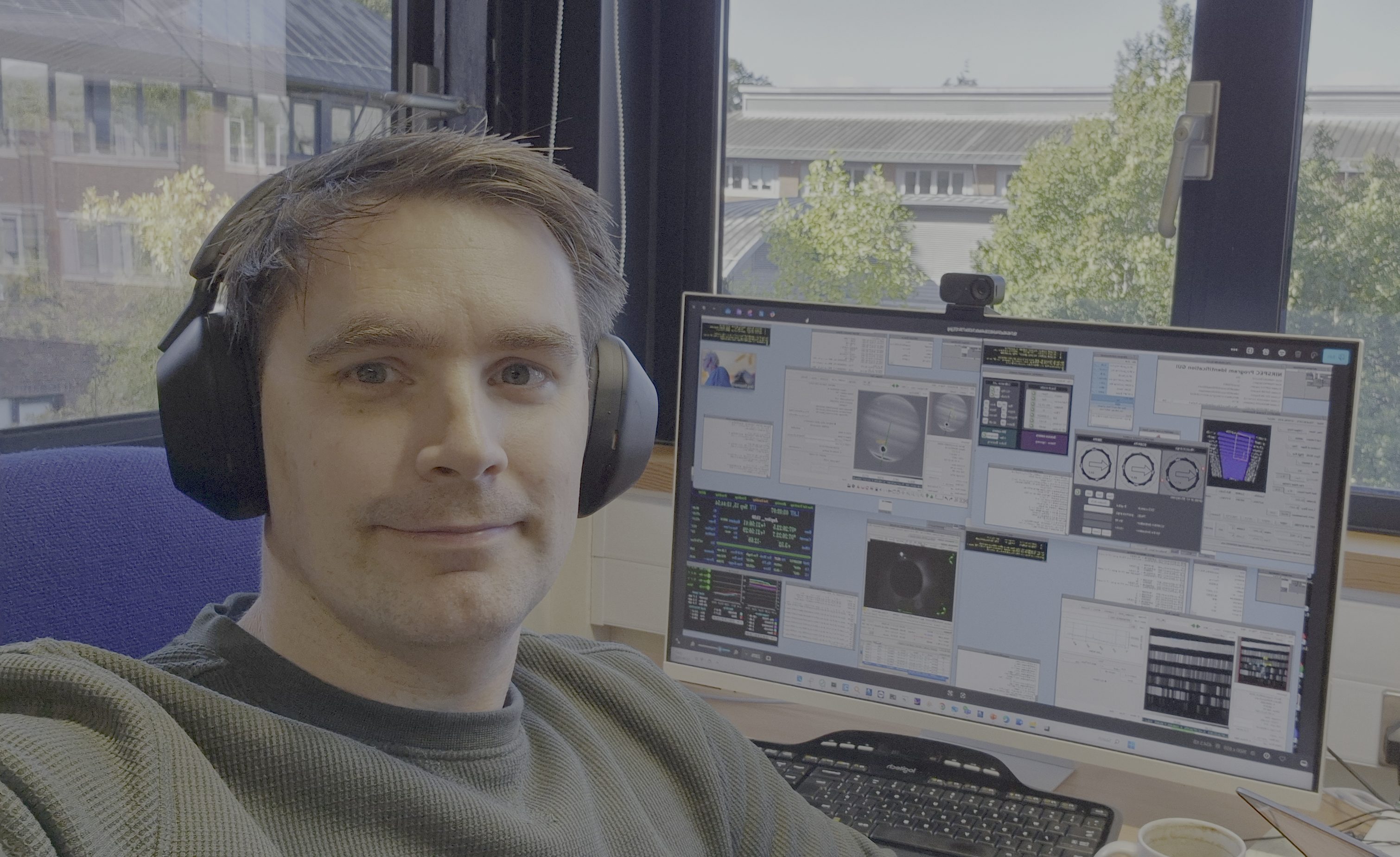
Professor Mike Lockwood, former president of the RAS and a colleague of Dr O’Donoghue at the University of Reading, said: "I'm genuinely delighted that James has won the Carl Sagan award because, like Sagan, he is superb communicator of science.
"His animations are viewed by astonishing numbers of people and provide clear explanation of the physics of solar system bodies and an immersive experience so you can explore the solar system from the comfort of your own home."
The medal is named after the late American astronomer and broadcaster Dr Carl Sagan, whose 1980 documentary series Cosmos was watched by at least 500 million people across 60 countries.
Previous winners have been recognised for communicating research on topics including the origins of the Moon, the exploration of Saturn, and the search for habitable planets beyond our solar system.
The AAS said: "Dr O’Donoghue is an extraordinarily creative and effective communicator of topics in planetary science, while also being a recognised leader in observations of the upper atmospheres of the giant planets and an engaged member of the planetary science community.
"He truly exemplifies the spirit of the Sagan Prize through the combination of his unique and impactful communication work with his scientific leadership."
ENDS
Media contacts
Sam Tonkin
Royal Astronomical Society
Mob: +44 (0)7802 877 700
Notes for editors
About the Royal Astronomical Society
The Royal Astronomical Society (RAS), founded in 1820, encourages and promotes the study of astronomy, solar-system science, geophysics and closely related branches of science.
The RAS organises scientific meetings, publishes international research journals, recognises outstanding achievements by the award of medals and prizes, maintains an extensive library, supports education through grants and outreach activities and represents UK astronomy nationally and internationally. Its more than 4,000 members (Fellows), a third based overseas, include scientific researchers in universities, observatories and laboratories as well as historians of astronomy and others.
The RAS accepts papers for its journals based on the principle of successful peer review, following which experts on the Editorial Boards accept the papers for publication. The Society issues press releases based on a similar principle, but the organisations and scientists concerned have overall responsibility for their content.
Keep up with the RAS on Instagram, Bluesky, LinkedIn, Facebook and YouTube.
Download the RAS Supermassive podcast