
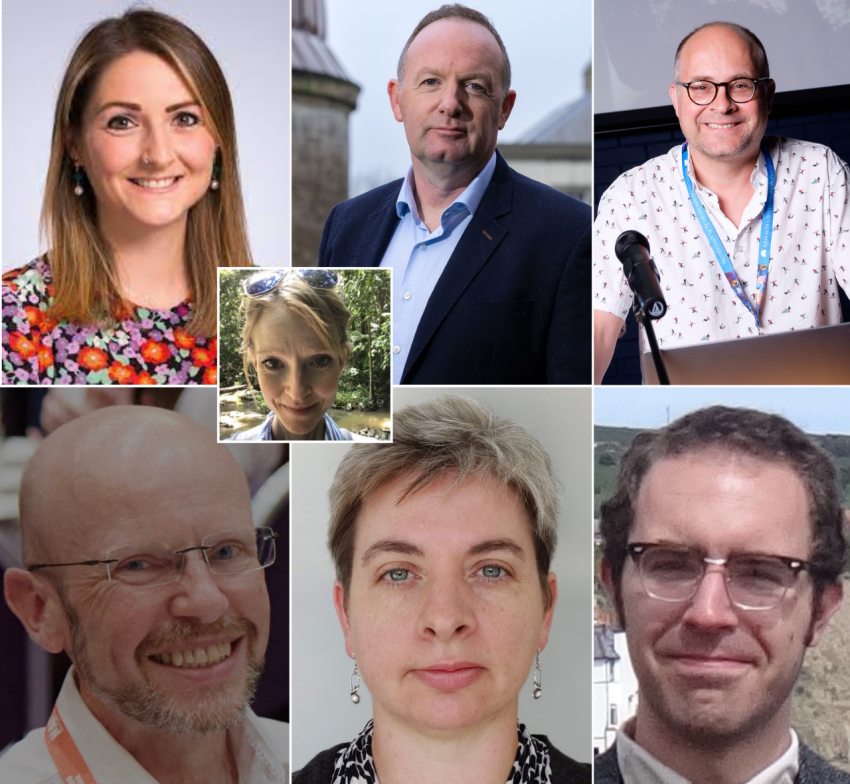

This year's Royal Astronomical Society (RAS) election saw six new trustees appointed to Council, including two vice presidents.
Dr Olivia Keenan, Professor David Alexander, Dr Emma Woodfield and Professor Peter Gallagher were all elected as councillors following the Society's AGM on Friday 8 May.
Professor Jorick Vink, of the Armagh Observatory and Planetarium, and Dr Andy Nowacki, of the University of Leeds, became Vice Presidents and will serve for three years, while Dr Sheona Urquhart, of The Open University, was re-elected as a Secretary for a five-year term.
Vice President (A) - Professor Jorick Vink, Armagh Observatory and Planetarium
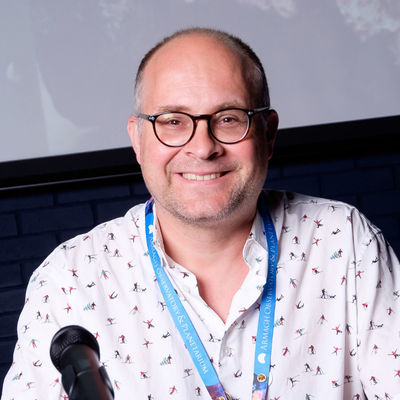
Professor Vink works on massive and very massive stars across a wide range of metallicities, from the local universe to high redshift. He is Principal Investigator of the European Southern Observatory's Large Programme 'X-shooting Ulysses: Massive stars at low metallicity' and has served on numerous international collaborations, review panels, and scientific organising committees.
Originally from the Netherlands, he has worked across both UK and European astronomy communities throughout his career.
"I am honoured to join RAS Council as Vice President (Astronomy) at such an important time for our community," Professor Vink said. "I care deeply about supporting early career researchers, fostering international collaboration, and ensuring the RAS continues to represent the full breadth of UK astronomy in a constructive and inclusive way."
Vice President (G) - Dr Andy Nowacki, University of Leeds
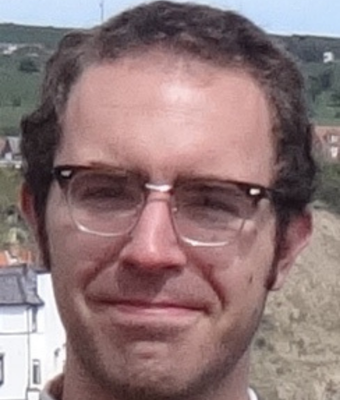
Dr Nowacki is a seismologist who studies the dynamics and structure of the Earth at all levels, from the convection of the mantle, through the movement of magma in volcanoes, to the compaction of soil in agriculture, and icequakes.
His work involves a mixture of methodological development to better use data to image the Earth's interior, and the gathering of new data around the world.
He completed his PhD at the University of Bristol before taking up a Leverhulme fellowship at the University of Leeds, and has held a permanent position there since 2018, teaching successive generations of geophysicists and advising early career scientists.
Dr Nowacki said: "Joining the Council of the Royal Astronomical Society as Vice President (G) is a great honour for me, and I am looking forward to working with everyone in the RAS and across the UK's geophysics and astronomy communities to support the Society's goals of encouraging and promoting those subjects."
Secretary (A) - Dr Sheona Urquhart, The Open University
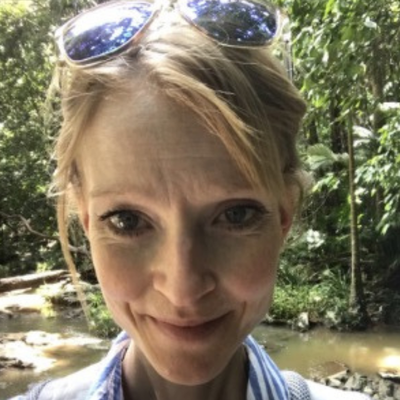
Dr Urquhart has been re-elected as the Society's Secretary for Astronomy.
Her role at The Open University ranges from active research into galaxy evolution and working in international collaborations to participating in outreach initiatives at schools and festivals.
It also includes observing runs to facilities around the world, developing and delivering modules in physics and astronomy, supervising PhD students and managing a wide range of associate lecturers.
Dr Urquhart has also collaborated with the BBC as a science consultant on numerous TV productions.
Councillor (G) - Professor Peter Gallagher, DIAS Dunsink Observatory
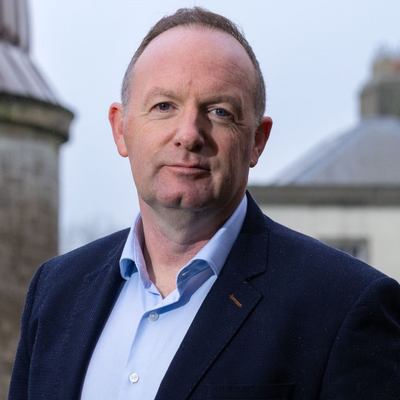
Professor Gallagher is Director of DIAS Dunsink Observatory and an Adjunct Professor at Trinity College Dublin. His research involves understanding solar activity and how it impacts the Earth's ionosphere and magnetic field.
Professor Gallagher has been a Fellow of the RAS since 1998, is a Fellow of the Institute of Physics and was recently elected a Member of the Royal Irish Academy. He is involved in numerous European Space Agency and NASA space missions to study the Sun and space weather and is chair of the Low Frequency Array (LOFAR) ERIC Council.
"I am delighted to join the Council of the RAS," Professor Gallagher said. "I am passionate about astronomical research, scientific heritage and public engagement, and aim to support these areas during my term on the RAS Council.
"Today, more than ever, we in the RAS need to champion the importance of fundamental research and its benefits to society and indeed humanity."
Councillor (G) - Dr Emma Woodfield, British Antarctic Survey
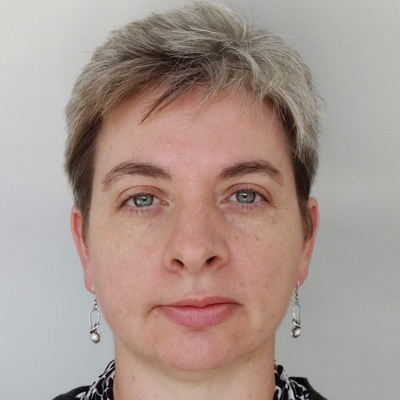
Inspired by astronomy as a child, Dr Emma Woodfield completed a Masters degree in Natural Sciences followed by a PhD in Space Physics. She spent many years as a postdoc at research institutions and universities in the UK and US.
Dr Woodfield now works at the British Antarctic Survey, where her research interests cover a wide range, from the Earth's ionosphere all the way up to the radiation belts of Jupiter and Saturn.
She has twice served on the Magnetosphere, Ionosphere and Solar-Terrestrial (MIST) Council, most recently as the chair.
"Having been a member of the RAS for over 20 years, it is great to have a chance to give something back to the Society and the community it serves," Dr Woodfield said.
Councillor (A) - Professor David Alexander, Durham University
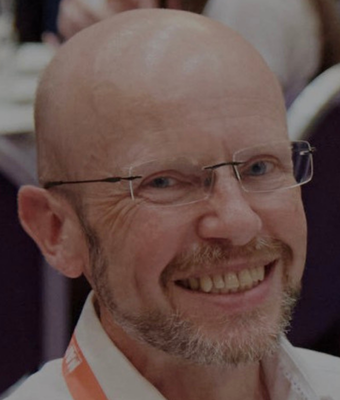
Professor Alexander was the former Head of Astronomy at Durham University and currently chairs the Physics Board of Examiners. He was the main organiser for NAM2025.
His research focuses on Active Galactic Nuclei (AGN), the observed manifestation of growing supermassive black holes. He uses multi-wavelength observations and large-scale spectroscopic surveys to measure their properties, understand their connection to galaxies, and to identify distinct sub populations to track the evolutionary lifecycle of AGN activity.
Professor Alexander also co-leads a multi-disciplinary project to understand how research communities can be best utilised to efficiently drive forward research and innovation.
"I am happy to be joining the RAS Council at this critical time for UK astronomy to fight the potentially catastrophic funding cuts to particle physics, astronomy and nuclear research areas and to help us work together and strengthen as a community," he said.
Councillor (A) - Dr Olivia Keenan, King’s College London
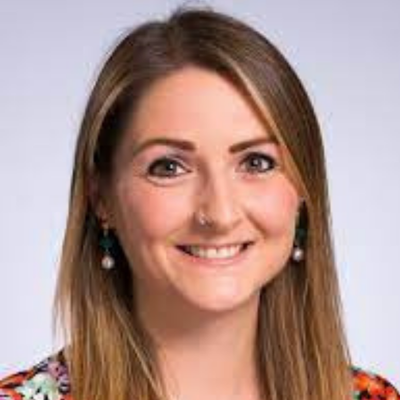
Dr Keenan is Associate Director Research Initiatives at King's College London. She has expertise in research policy, knowledge exchange, public engagement and partnership building and has experience working with funding councils, government and higher education senior leaders to articulate the value and impact of the UK research ecosystem.
Dr Keenan has a PhD in Astrophysics from Cardiff University, is the Chair of the Institute of Physics South Central Branch and was previously Director of Outreach and Public Engagement at the South East Physics network.
"I'm excited to be joining Council at a time of both great opportunity and challenge for the Royal Astronomical Society and for astronomy and geophysics," she said. "I hope I can support the Society's policy work, ensuring the value of our subjects is recognised by decision makers, and securing the future of our disciplines."
Ian Russell, Executive Director of the RAS, said: "It gives me great pleasure to welcome the six new trustees to RAS Council, alongside Dr Sheona Urquhart, who has been re-elected for a further term of office.
"I very much look forward to working with all of our new trustees, as well as those already on RAS Council. I would also like to thank all the candidates who stood in the election and everyone who took the time to vote and have their say."
ENDS
Media contacts
Sam Tonkin
Royal Astronomical Society
Mob: +44 (0)7802 877 700
Notes for editors
About the Royal Astronomical Society
The Royal Astronomical Society (RAS), founded in 1820, encourages and promotes the study of astronomy, solar-system science, geophysics and closely related branches of science.
The RAS organises scientific meetings, publishes international research journals, recognises outstanding achievements by the award of medals and prizes, maintains an extensive library, supports education through grants and outreach activities and represents UK astronomy nationally and internationally. Its more than 4,000 members (Fellows), a third based overseas, include scientific researchers in universities, observatories and laboratories as well as historians of astronomy and others.
The RAS accepts papers for its journals based on the principle of successful peer review, following which experts on the Editorial Boards accept the papers for publication. The Society issues press releases based on a similar principle, but the organisations and scientists concerned have overall responsibility for their content.
Keep up with the RAS on Instagram, Bluesky, LinkedIn, Facebook and YouTube.
Download the RAS Supermassive podcast