


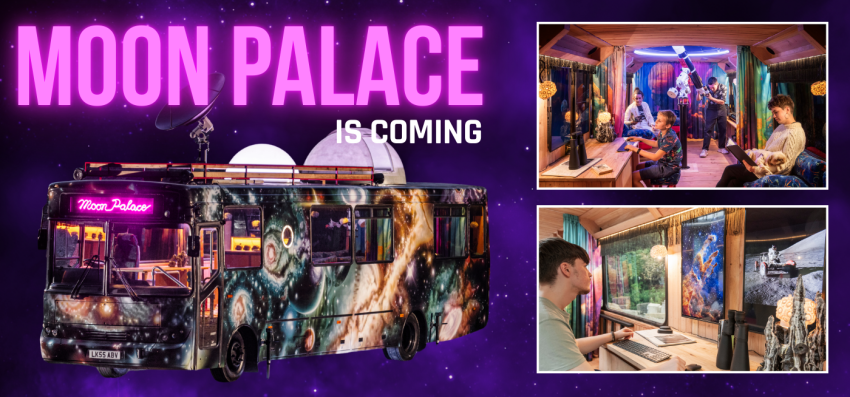

Families, art lovers and astronomy enthusiasts will be treated to an out-of-this-world experience for February half-term – as the Royal Astronomical Society (RAS) welcomes a mobile observatory known as 'Moon Palace' to the Burlington House courtyard in central London.
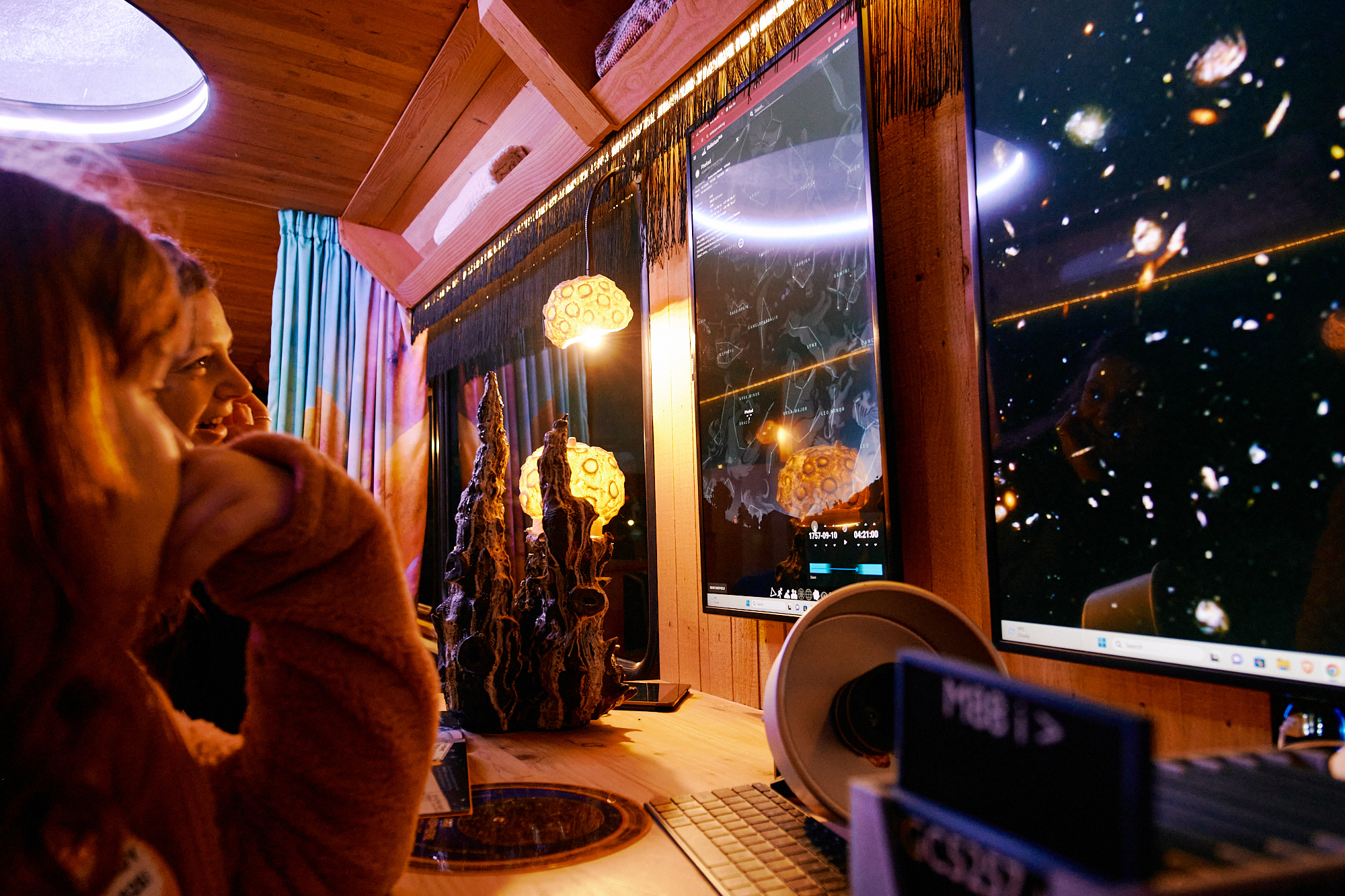
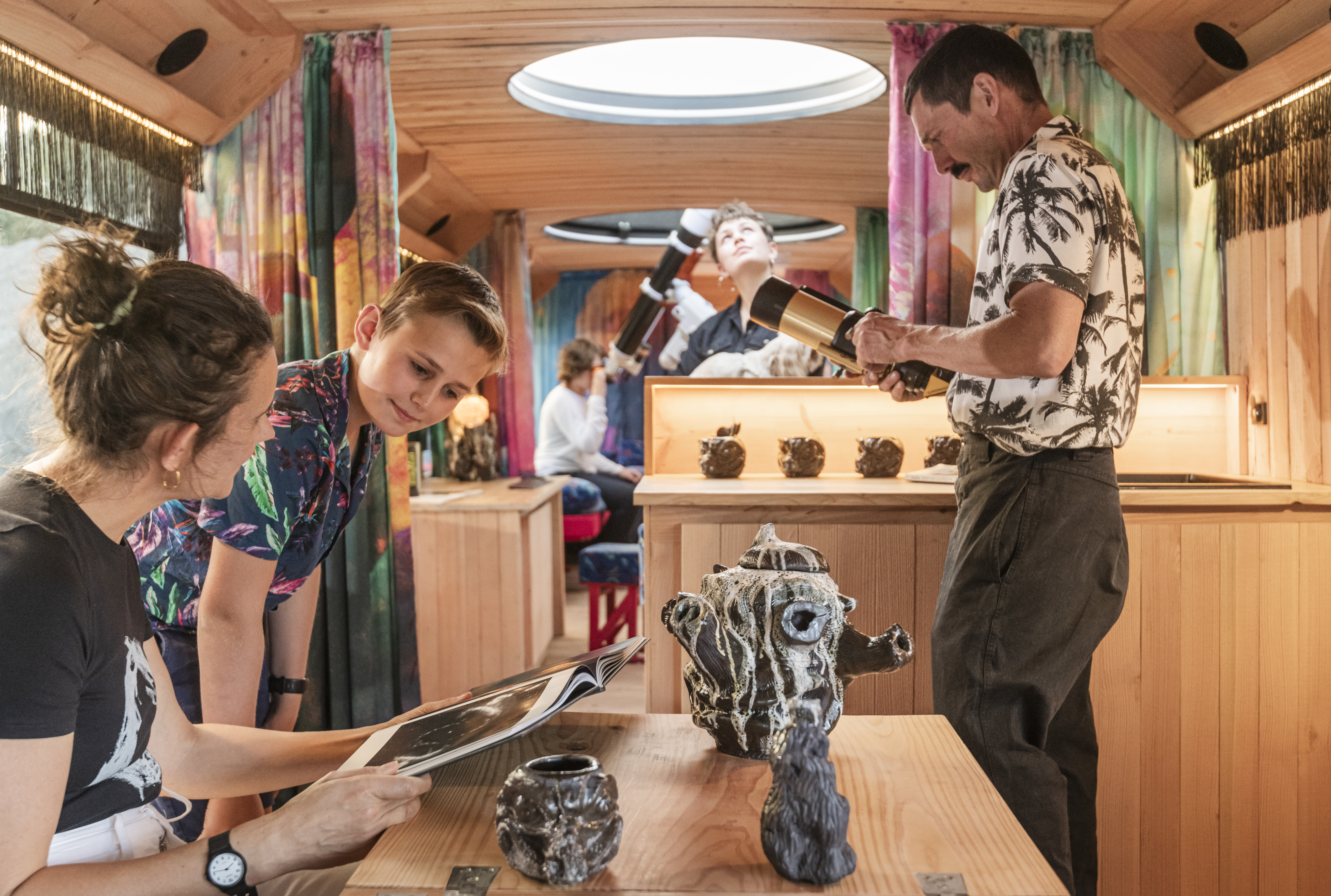
The converted school bus sports a mesmerising array of colourful nebulae on its exterior, while inside it is equipped with a powerful optical telescope for stargazing at planets, distant stars and galaxies, plus a rooftop radio telescope which allows visitors to listen to sounds of the universe.
It also features a lunar map on board, plenty of sculptures and artwork of planets and stars, cosy blankets to keep warm and 'cosmic tea' served in mugs resembling an alien head.
Moon Palace will be welcoming visitors from 10am-4pm on Friday 20 and Saturday 21 February and its arrival coincides with a special February half-term family talk at the RAS by European Space Agency reserve astronaut Meganne Christian.
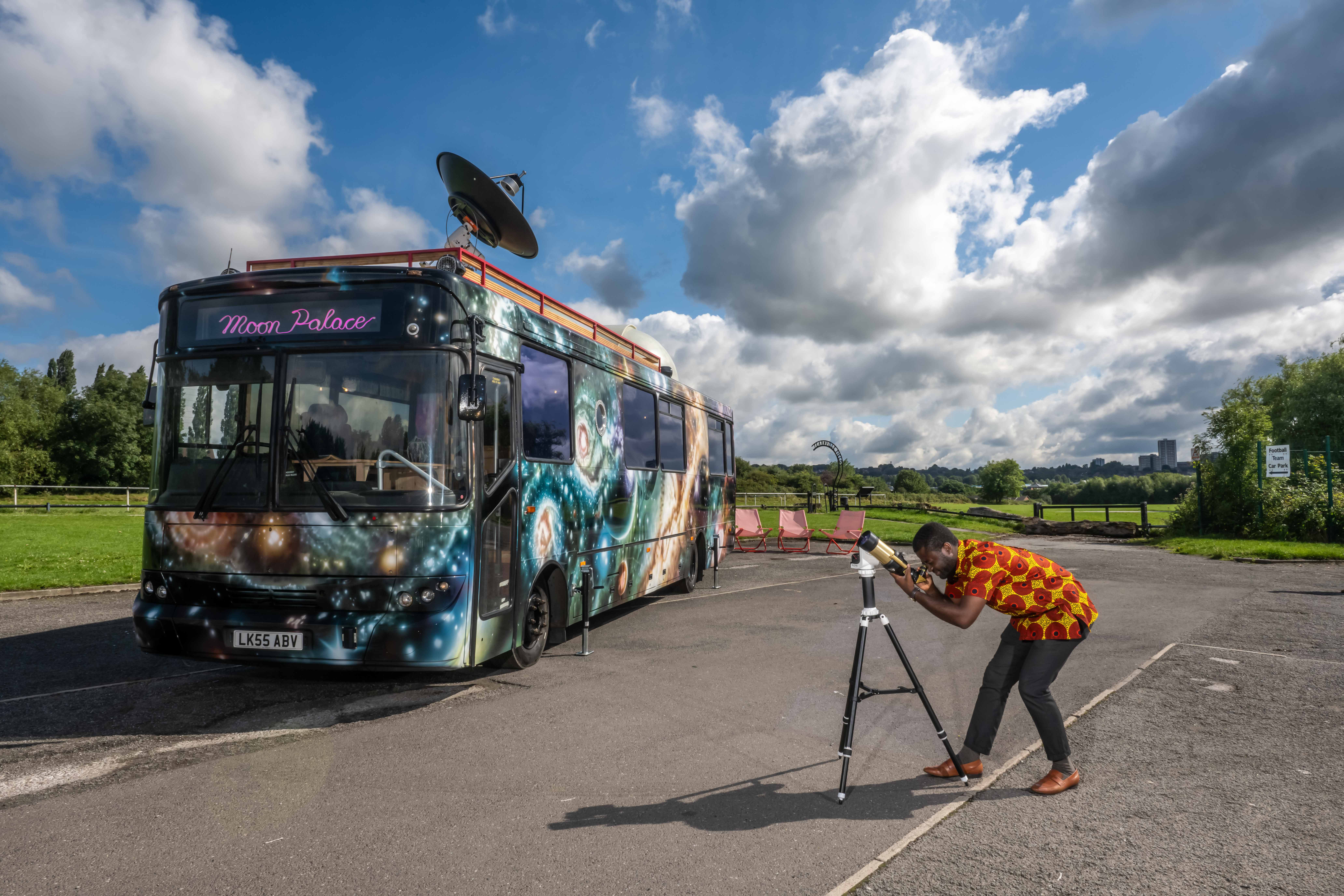
The mobile observatory was inspired by the legacy of Leeds-born John Smeaton, a keen astronomer who is seen as the father of civil engineering.
An original East Leeds Project concept, it was created by artists Heather Peak and Ivan Morison, with expert advice from the School of Physics and Astronomy at the University of Leeds and Leeds Astronomical Society.
Moon Palace, which made an appearance at Durham University for the National Astronomy Meeting in July 2025, has been described as a "collision of creativity, art and science" and is aimed at facilitating engaging discussions, encouraging teamwork and innovative thinking.
It was designed to be a sensory-rich, inclusive experience for all ages and abilities.
There will be no booking required to visit the mobile observatory while it is stationed in the Burlington House courtyard – visitors are welcome to turn up on the day and come and have a look around.
To find out more about it, visit: https://eastleedsproject.org/moon-palace/.
ENDS
Further information
About Moon Palace
Moon Palace is an artwork and working mobile observatory by artists Heather Peak and Ivan Morison. Co-produced by East Leeds Project and LEEDS 2023 and commissioned by Foxglove and LEEDS 2023 for Smeaton300. Developed in partnership with the School of Physics and Astronomy, University of Leeds.
About the Royal Astronomical Society
The Royal Astronomical Society (RAS), founded in 1820, encourages and promotes the study of astronomy, solar-system science, geophysics and closely related branches of science.
The RAS organises scientific meetings, publishes international research and review journals, recognises outstanding achievements by the award of medals and prizes, maintains an extensive library, supports education through grants and outreach activities and represents UK astronomy nationally and internationally. Its more than 4,000 members (Fellows), a third based overseas, include scientific researchers in universities, observatories and laboratories as well as historians of astronomy and others.
The RAS accepts papers for its journals based on the principle of peer review, in which fellow experts on the editorial boards accept the paper as worth considering. The Society issues press releases based on a similar principle, but the organisations and scientists concerned have overall responsibility for their content.
Keep up with the RAS on Instagram, Bluesky, LinkedIn, Facebook and YouTube.
Download the RAS Supermassive podcast