



If we're to find extraterrestrial life in the universe, astronomers have pinpointed the best places to look for it.
They have identified just under 50 rocky worlds most likely to be habitable out of the more than 6,000 exoplanets discovered so far.
Their research, published today in Monthly Notices of the Royal Astronomical Society, would be useful in a scenario portrayed in the newly-released Hollywood blockbuster Project Hail Mary, which sees Ryan Gosling's character having to travel to an exoplanet system in search of a way to save Earth.
On the way he encounters an alien lifeform named Rocky and the fictional extraterrestrial micro-organisms Astrophage and Taumoeba.
Professor Lisa Kaltenegger, director of the Carl Sagan Institute at Cornell University, and a team of undergraduate students used new data from the European Space Agency's Gaia mission and the NASA Exoplanet Archive to identify planets in the so-called habitable zone.
This is an area not too close to a host star that it’s too hot, and not too far away that it’s too cold. lt also means that, like Earth, a planet is much more likely to have water on its surface – which is a key ingredient for life.
The paper, titled 'Probing the limits of habitability: a catalogue of rocky exoplanets in the habitable zone', also shortlisted the worlds that receive the most similar energy from their star compared to what Earth gets from our Sun.
"As Project Hail Mary so beautifully illustrates, life might be much more versatile than we currently imagine, so figuring out which of the 6,000 known exoplanets would be most likely to host extraterrestrials such as Astrophage and Taumoeba – or Rocky – could prove critical, and not just to Ryan Gosling," Professor Kaltenegger said.
"Our paper reveals where you should travel to find life if we ever built a 'Hail Mary' spacecraft."
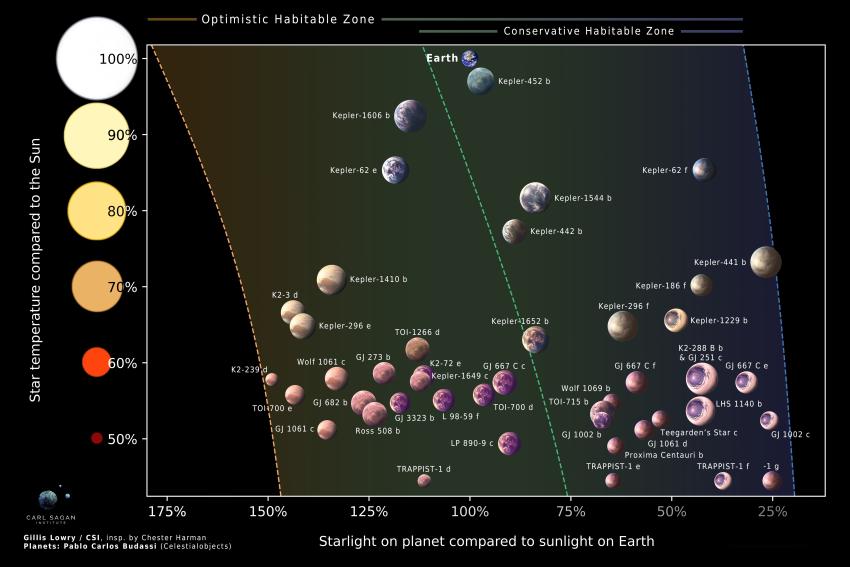
The researchers pinpointed 45 rocky worlds that may support life in the habitable zone, and another 24 in a narrower 3D habitable zone that makes a more conservative assumption of how much heat a planet can take before it loses its habitability.
They include some famous exoplanets, including Proxima Centauri b, TRAPPIST-1f and Kepler 186f, as well as others that are not as well known, such as TOI-715 b.
The most interesting planets of those listed, according to the authors, are TRAPPIST-1 d, e, f and g, which are 40 light-years from Earth, as well as LHS 1140 b, which is 48 light-years away. Whether these planets could have liquid water depends in part if they can hold an atmosphere.
The worlds that get light from their stars most similar to what modern Earth receives from the Sun are the transiting planets TRAPPIST-1 e, TOI-715 b, Kepler-1652 b, Kepler-442 b, Kepler-1544 b and the planets Proxima Centauri b, GJ 1061 d, GJ 1002 b, and Wolf 1069 b, which make their stars wobble.
The authors also hope the planets they have identified near the edges of the habitable zone will shed light on exactly where habitability ends and if scientists' theories about those limits are correct. While the idea of the habitable zone has been developed since the 1970s, new observations will be critical in establishing whether certain assumptions need adapting, Professor Kaltenegger said.
In addition, exoplanets with unusual elliptical orbits around their star can trace the importance of a changing amount of heat hitting a world and help answer the question of whether a planet needs to stay in the habitable zone or can cross in and out of it and still remain habitable.
The transiting planets that can test the limit of habitability on the inner edge are K2-239 d, TOI-700e, K2-3d – as well as the planets Wolf 1061c and GJ 1061c, which make their stars wobble. Trappist-1g and Kepler-441b and GJ 102 can probe the outer edge of habitability where it gets extremely cold, the researchers say.
"While it's hard to say what makes something more likely to have life, identifying where to look is the first key step – so the goal of our project was to say 'here are the best targets for observation'," said Gillis Lowry, now a graduate student at San Francisco State University.
Fellow researcher Lucas Lawrence, now a graduate student at the University of Padua in Italy, said: "We wanted to create something that will enable other scientists to search effectively and we kept discovering new things about these worlds we wanted to investigate further."
Co-author Abigail Bohl, of Cornell University, added: "We know Earth is habitable, while Venus and Mars are not. We can use our Solar System as a reference to search for exoplanets that receive stellar energy between what Venus and Mars get.
"Observing these planets can help us understand when habitability is lost, how much energy is too much, and which planets remain habitable – or maybe never were.
"The same idea applies to eccentric planets: how much orbital eccentricity can a planet have while still holding onto its surface water and habitable conditions?
"We identified planets at the inner and outer edges of the habitable zone, as well as those with the highest eccentricities, to test our understanding of what it takes for a planet to be and remain habitable. We also identified the targets that are most observable with the James Webb Space Telescope (JWST) and other telescopes."
The students also earmarked the best planets to observe with different techniques, to give scientists the best odds of finding signs of life if they exist on these worlds.
The list they've created will guide astronomers studying the night sky with JWST, the upcoming Nancy Grace Roman Space Telescope (set to launch in 2027), the Extremely Large Telescope (set to see first light in 2029), the Habitable Worlds Observatory (expected to launch in the 2040s) and the proposed Large Interferometer For Exoplanets (LIFE) project.
Observing these small exoplanets is the only way to confirm if they have atmospheres, and whether astronomers need to refine their ideas of what limits the habitable zone, Lowry said.
She added that she's already been using the list to take an early look at the 10 planets that receive very similar radiation to Earth, identifying two that are close enough to study with current or upcoming telescopes: TRAPPIST-1 e and TOI-715 b.
The TRAPPIST-1 planetary system is a main focus of observation with the JWST telescope, a programme led by Nikole Lewis, associate professor of astronomy at Cornell. Trappist-1 and TOI-715 b are both small red stars, making it easier to see the small, Earth-sized planets orbiting around them.
ENDS
Media contacts
Sam Tonkin
Royal Astronomical Society
Mob: +44 (0)7802 877 700
Science contacts
Professor Lisa Kaltenegger
Director of the Carl Sagan Institute at Cornell University
Abigail Bohl
Cornell University
Gillis Lowry
San Francisco State University
Lucas Lawrence
University of Padua
Images & captions
Habitable zone planets diagram
Caption: A diagram depicting habitable zone boundaries across star type with rocky exoplanets from Bohl et al. (2026). The boundaries of the habitable zone shift based on star colour, since different wavelengths of light will heat a planet's atmosphere differently.
Credit: Gillis Lowry / Pablo Carlos Budassi
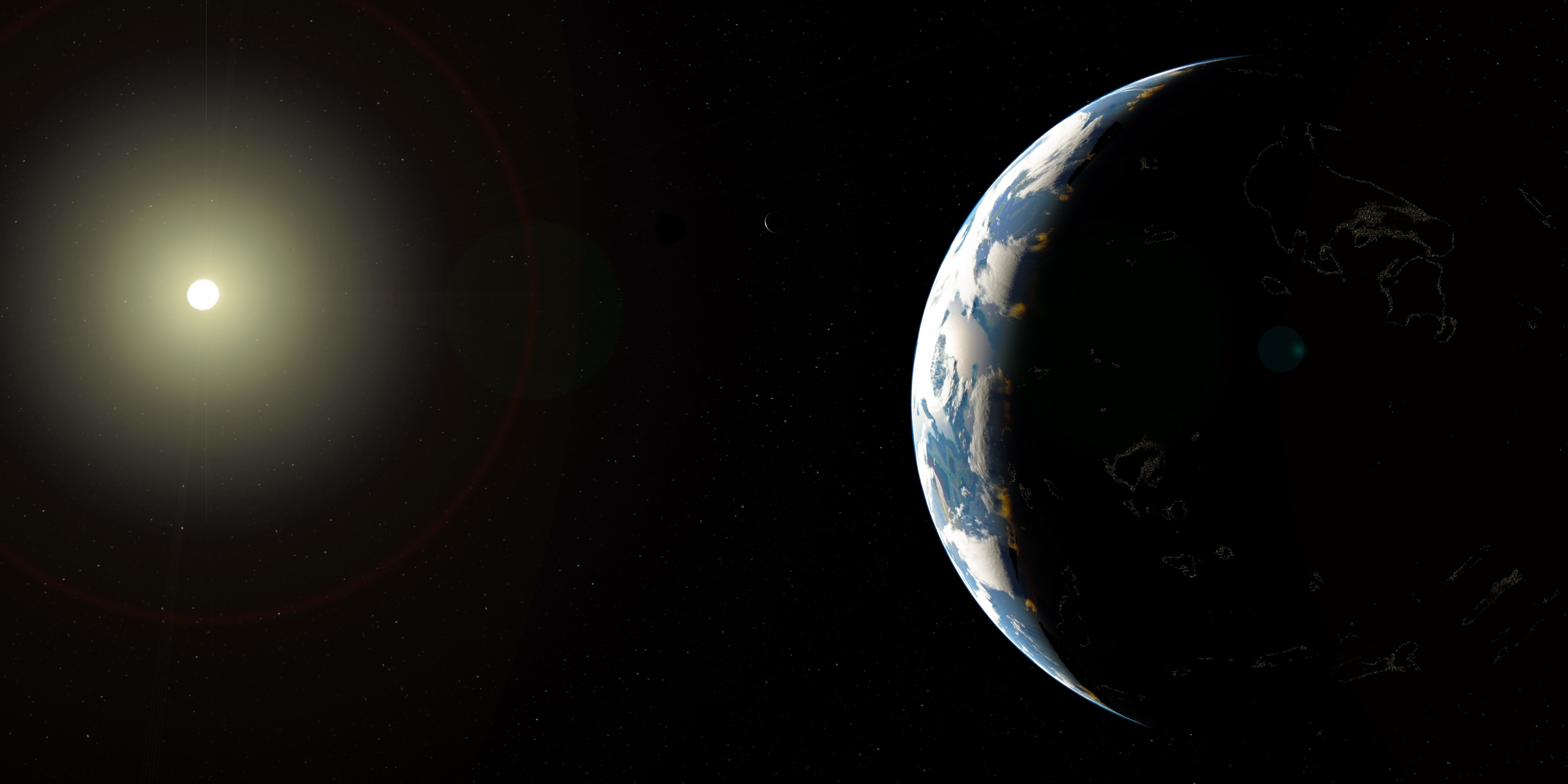
Caption: An artist's impression of a planetary system around a slightly hotter star than our Sun. In prior research, Carl Sagan Institute scientists have theorised that organisms could evolve biofluorescence to protect themselves from a more intense star.
Credit: Gillis Lowry
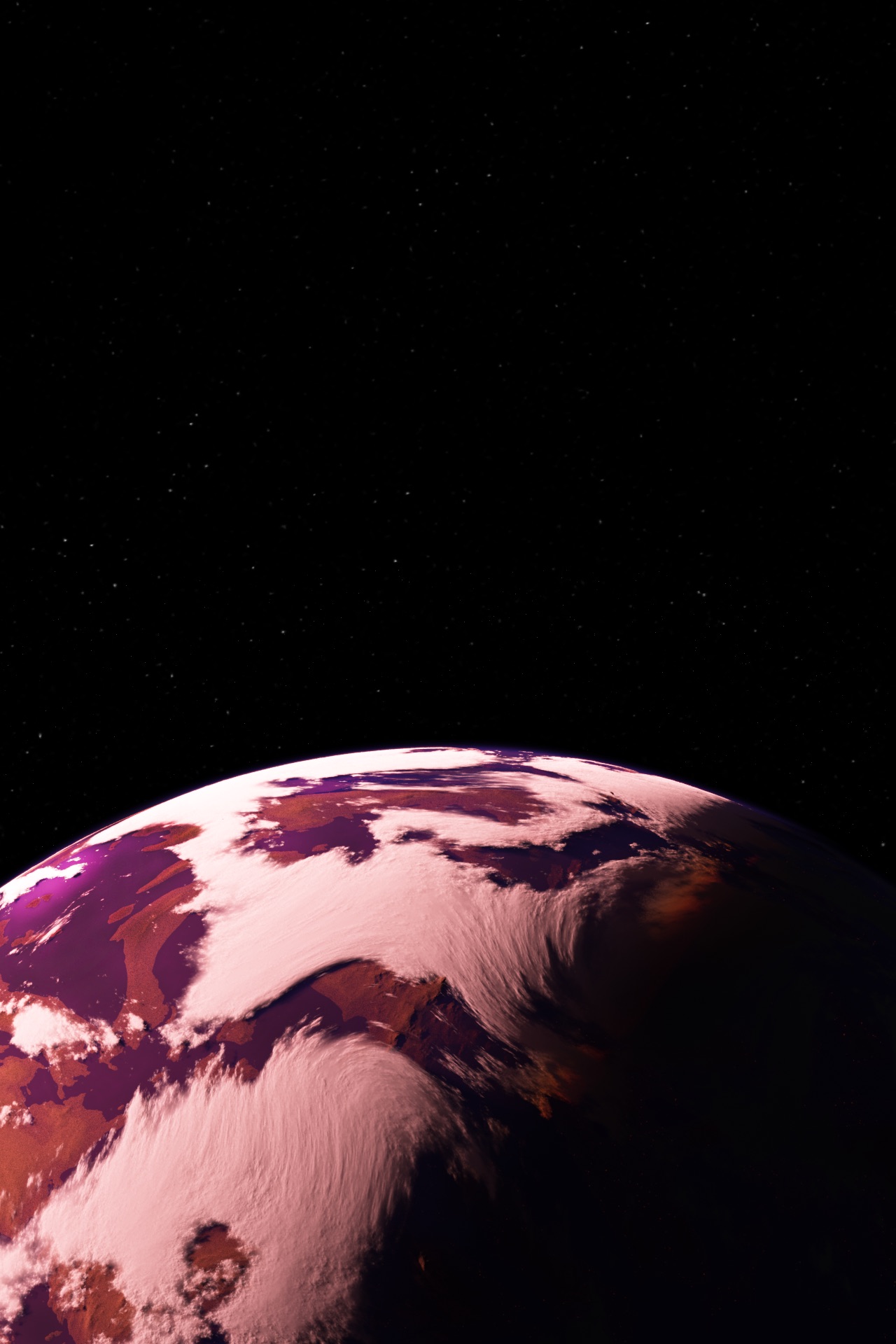
Caption: An artist's impression of a theoretical planet orbiting a redder star, which could cause microbes and plants on the planet's surface to reflect very different colours from Earth's green forests.
Credit: Gillis Lowry
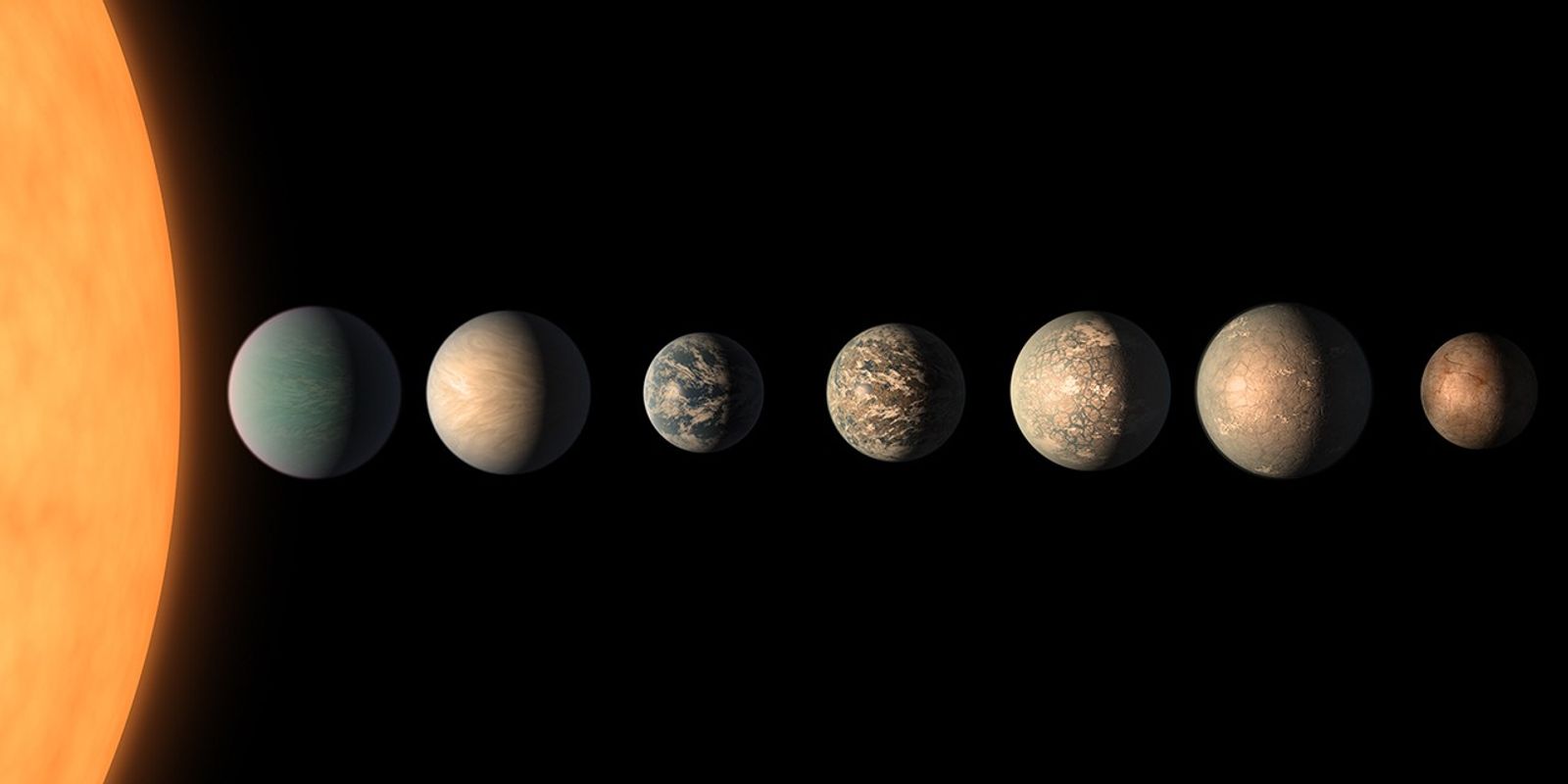
Caption: An artist's impression of what the TRAPPIST-1 planetary system may look like showing (from left to right) TRAPPIST-1 a, b, c, d, e, f, g and h, based on available data about the planets' diameters, masses and distances from the host star. Of these, TRAPPIST-1 d, e, f and g are thought to be the most Earth-like planets.
Credit: NASA/JPL-Caltech
Further information
The paper ‘Probing the limits of habitability: a catalogue of rocky exoplanets in the habitable zone’ by Bohl et al. has been published in Monthly Notices of the Royal Astronomical Society. DOI: 10.1093/mnras/stag028
The full list of the 45 exoplanets identified in the paper:
GJ 1002 b
GJ 1002 c
GJ 1061 c
GJ 1061 d
GJ 251 c
GJ 273 b
GJ 3323 b
GJ 667 C c
GJ 667 C e
GJ 667 C f
GJ 682 b
K2-239 d
K2-288 B b
K2-3 d
K2-72 e
Kepler-1229 b
Kepler-1410 b
Kepler-1544 b
Kepler-1606 b
Kepler-1649 c
Kepler-1652 b
Kepler-186 f
Kepler-296 e
Kepler-296 f
Kepler-441 b
Kepler-442 b
Kepler-452 b
Kepler-62 e
Kepler-62 f
L 98-59 f
LHS 1140 b
LP 890-9 c
Proxima Centauri b
Ross 508 b
TOI-1266 d
TOI-700 d
TOI-700 e
TOI-715 b
TRAPPIST-1 d
TRAPPIST-1 e
TRAPPIST-1 f
TRAPPIST-1 g
Teegarden's Star c
Wolf 1061 c
Wolf 1069 b
Notes for editors
About the Royal Astronomical Society
The Royal Astronomical Society (RAS), founded in 1820, encourages and promotes the study of astronomy, solar-system science, geophysics and closely related branches of science.
The RAS organises scientific meetings, publishes international research and review journals, recognises outstanding achievements by the award of medals and prizes, maintains an extensive library, supports education through grants and outreach activities and represents UK astronomy nationally and internationally. Its more than 4,000 members (Fellows), a third based overseas, include scientific researchers in universities, observatories and laboratories as well as historians of astronomy and others.
The RAS accepts papers for its journals based on the principle of peer review, in which fellow experts on the editorial boards accept the paper as worth considering. The Society issues press releases based on a similar principle, but the organisations and scientists concerned have overall responsibility for their content.
Keep up with the RAS on Instagram, Bluesky, LinkedIn, Facebook and YouTube.
Download the RAS Supermassive podcast