


What we do on the Moon now will set a precedent for preserving parts of the entire Solar System as we move out into it, according to astrophysicist and leading space debris expert Dr Jonathan McDowell.
He was speaking during a debate in which experts considered whether the far side of the Moon should be preserved solely for scientific endeavours or be opened to commercial and industrial activity.
Dr McDowell added: "Is the whole Solar System up for grabs, or are we going to have nature reserves and science reserves, where we don't mine all the asteroids and don't turn all of Mars into a theme park?"
The debate on Tuesday 21 July formed part of several sessions on lunar governance during the Royal Astronomical Society's National Astronomy Meeting (NAM 2026) being held this week at the University of Birmingham.
A panel of eminent astronomers and commercial space professionals were asked to explore a question that is becoming increasingly important as governments and commercial companies prepare more missions to the Moon: Should the lunar far side remain a protected scientific environment, or should commercial activity be allowed alongside research?
The far side of the Moon presents a unique environment that is radio-quiet and free of artificial light. This is because the Moon is tidally locked to Earth, meaning its rotation on its axis takes exactly as long as its orbit around Earth. These two motions sync up perfectly, meaning the same lunar hemisphere faces Earth at all times and the far side of the Moon is never exposed to 'Earth noise'.
Astronomers Professor Joe Silk and Dr McDowell argued in favour of preserving the lunar far side, calling it one of the most scientifically valuable locations in our Solar System.
Permanently shielded from Earth's radio transmissions, they said it is the only nearby location where radio telescopes could observe the universe without interference from human-made signals. Such observatories could detect faint radio emissions from the cosmic 'dark ages', the period after the Big Bang before the first stars and galaxies formed.
They also argued that the far side offers an exceptionally stable environment for future gravitational wave detectors. With no atmosphere, no weather and very little seismic activity compared with Earth, the Moon could provide an ideal platform for experiments that need to measure extraordinarily small distortions in space-time, such as gravitational waves that give us insights into the origins of the universe.
The permanently dark lunar night also offers conditions free from the artificial light pollution that increasingly affects optical astronomical observations on Earth.
Professor Silk argued that protecting these conditions now is essential if future generations are to tackle some of astronomy's biggest unanswered questions.
"I think it's important to preserve the far side for the ultimate science, which will be decades in the future," he said. "We have to plan ahead, and the reason is very simply that these are some of the most important questions that humanity has ever posed: Are we alone in the universe, and how did the universe begin?"
Silk and McDowell said many of these scientific opportunities could be compromised if the far side becomes developed. Future communications satellites around the Moon, landing spacecraft, mining activities, and other infrastructure could introduce radio interference, dust, vibration and artificial light, they said, permanently degrading the unique environment that currently makes the far side so valuable for science.
McDowell said the decisions made over the next few years would set a precedent that shapes humanity's wider relationship with the Solar System.
"What we do now and in the next few years to preserve science on the Moon is going to be critical not just to the future of science on the Moon, but to the future of science and the environment throughout the Solar System," he told the audience.
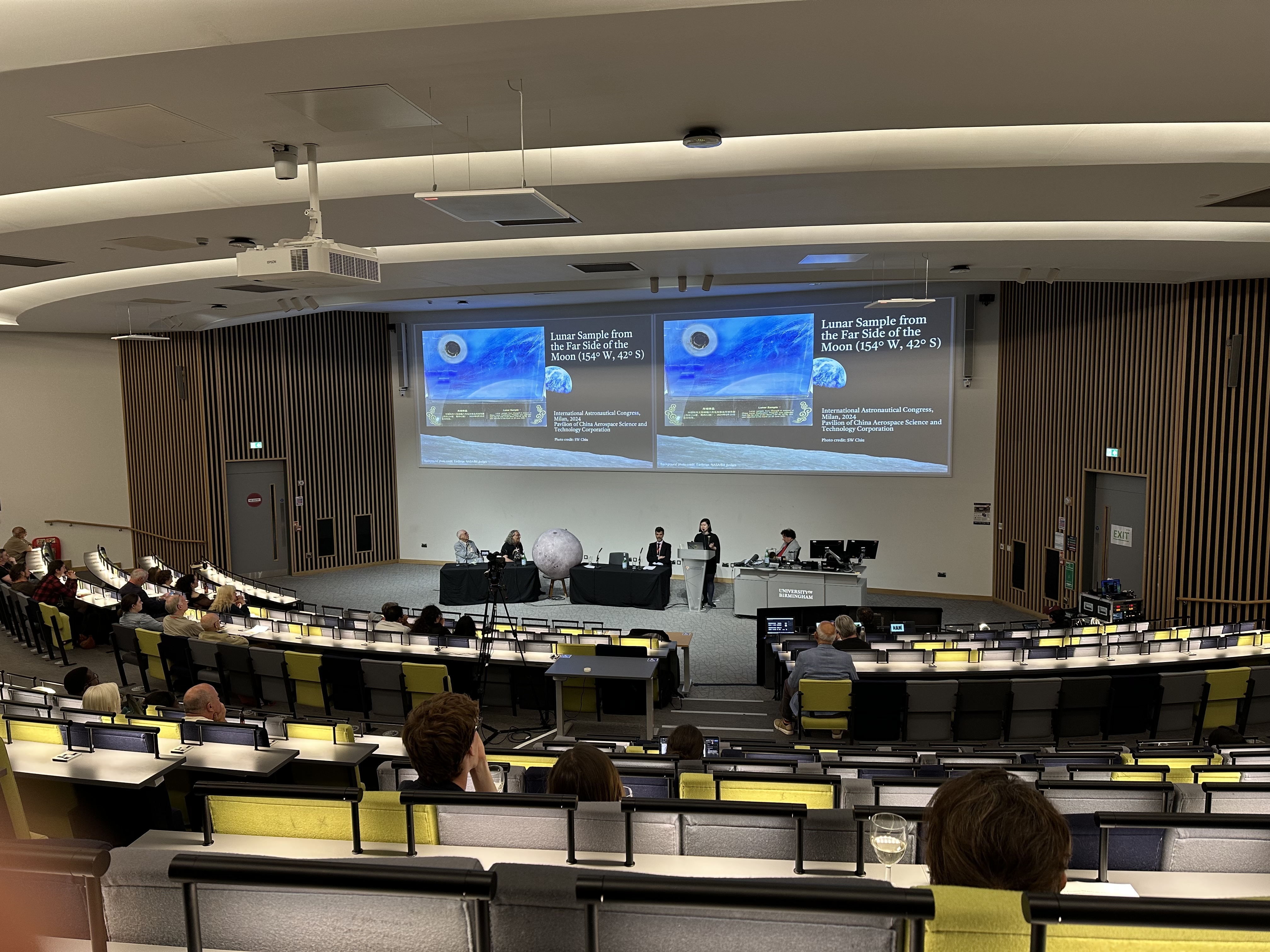
Those speaking against the motion argued that scientific discovery and commercial activity should not be viewed as mutually exclusive. Dr Nikita Chiu said the debate was about ensuring future exploration could be sustained, arguing that commercial investment would be essential if lunar exploration is to become more resilient and less dependent on government funding.
"Today's debate is not to challenge the value of scientific endeavours, but is about understanding how we may sustain exploratory efforts," she added.
Dr Chiu argued that commercial and scientific activities can coexist under appropriate governance, adding: "An inclusive cislunar economy for the far side of the Moon does not need to lead to a 'Wild West' situation. I argue that the far side of the Moon should not be confined solely for scientific endeavours."
The debate was held ahead of the conference session 'Protecting the Moon: Governance, regulation and the lunar economy', which will explore how international governance could protect the Moon's radio-quiet regions, dark sky environments and scientifically significant sites while enabling responsible commercial activity and clear rules for future lunar exploration.
Audience members voted before and after the debate via a QR code about the statement: "The far side of the Moon shall be preserved solely for scientific endeavours".
Support for the motion increased from 68 per cent before the debate to 76 per cent after hearing arguments from both sides of the panel.
The discussion formed part of a wider programme at NAM 2026 examining future governance of the Moon. While renewed interest in lunar exploration promises discoveries and commercial opportunities, it also raises questions about whether to protect parts of the Moon that offer unique scientific value.
The debate was convened by Professor Martin Ward, of the University of Durham, who hosted the evening.
ENDS
Media contacts
Sam Tonkin
Royal Astronomical Society
Mob: +44 (0)7802 877 700
Dr Robert Massey
Royal Astronomical Society
Mob: +44 (0)7802 877 699
Megan Eaves
Royal Astronomical Society
Science contacts
Professor Joe SIlk
Johns Hopkins University
Dr Jonathan McDowell
Dr Nikita Chiu
Durham University
Professor Martin Ward
Durham University
Images & captions
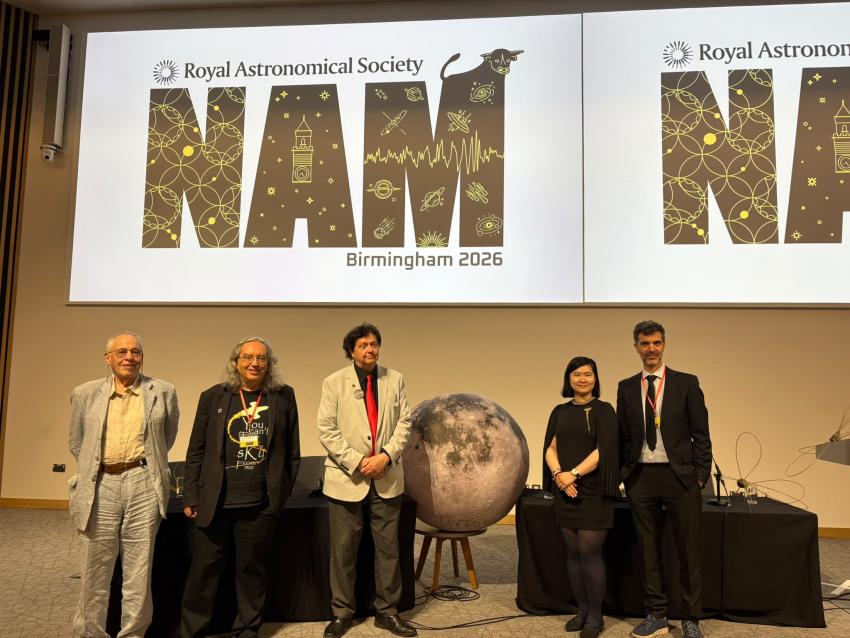
Caption: From left, Professor Joe Silk, Dr Jonathan McDowell, Professor Martin Ward, Dr Nikita Chiu and Dr Manuel Salvoldi took part in a debate at NAM2026 about whether the far side of the Moon should be reserved for science.
Credit: Royal Astronomical Society/Jess Shaper
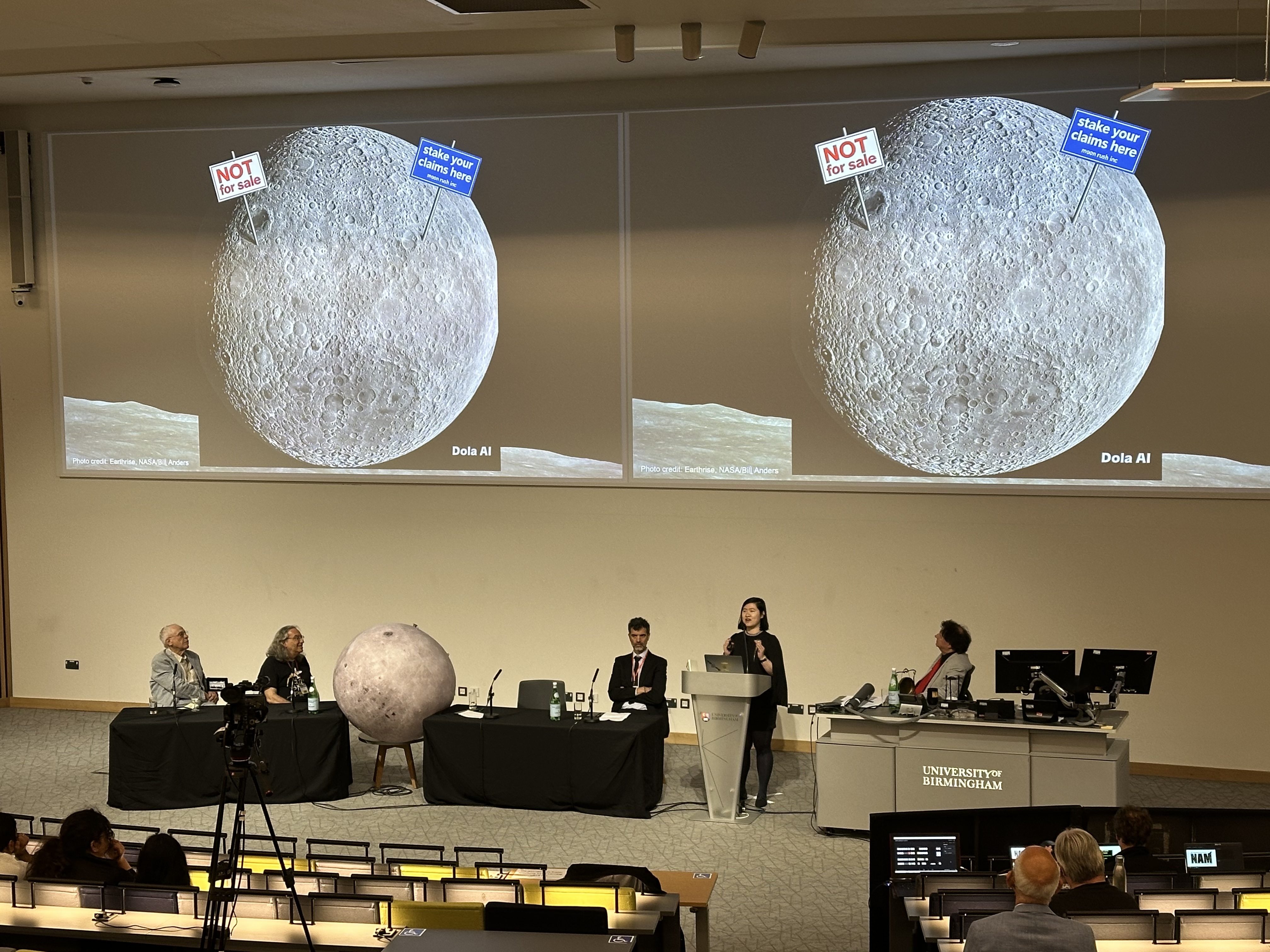
Caption: Dr Nikita Chiu argued that commercial and scientific activities can coexist under appropriate governance.
Credit: Royal Astronomical Society
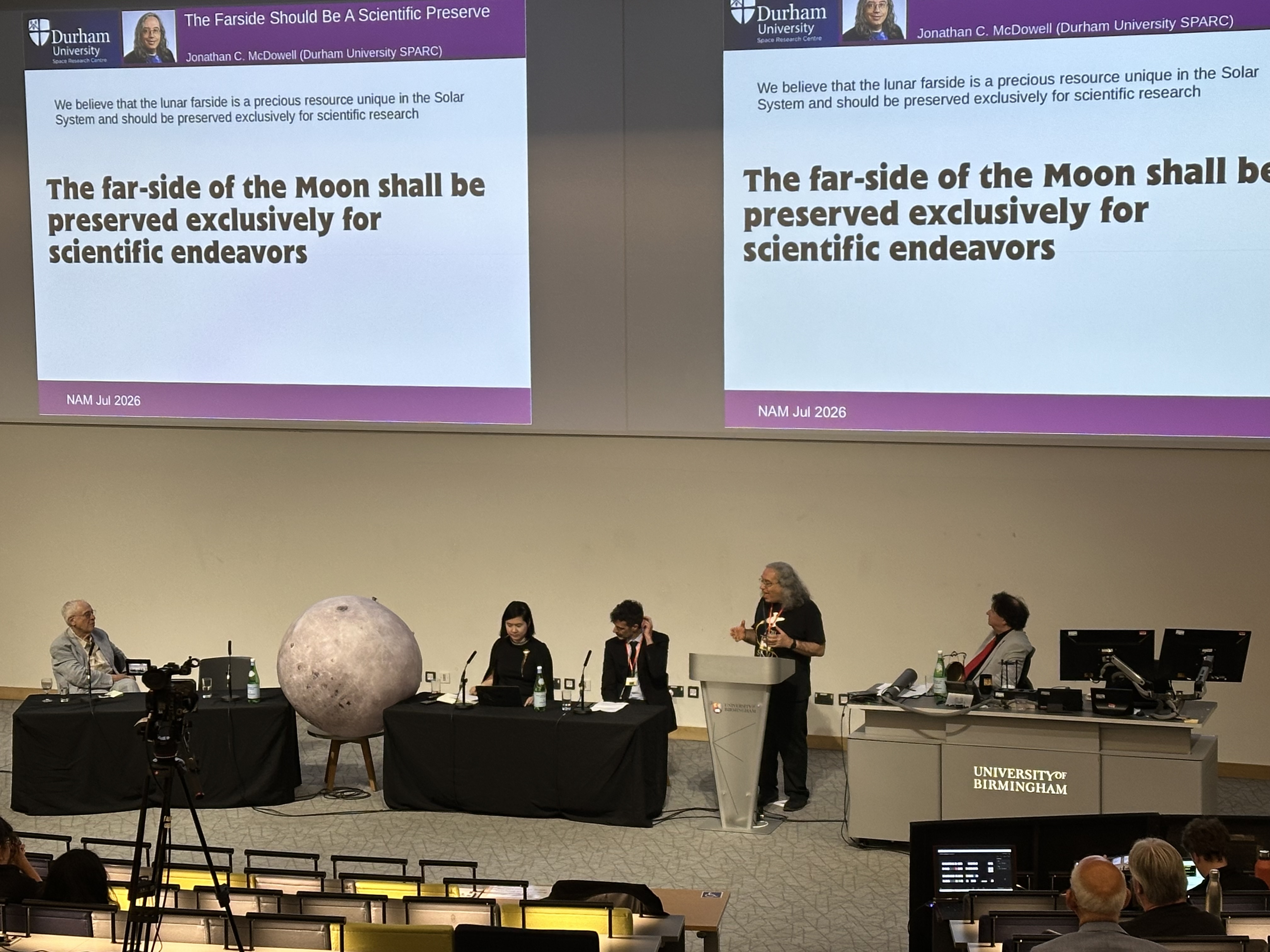
Caption: Astrophysicist Dr Jonathan McDowell stressed that what we do on the Moon today will set a precedent for preserving parts of the entire Solar System as we move out into it.
Credit: Royal Astronomical Society
Caption: "An inclusive cislunar economy for the far side of the Moon does not need to lead to a 'Wild West' situation," Dr Chiu said.
Credit: Royal Astronomical Society
Further information
Scientists for the 'pro' side:
Professor Joe Silk
Homewood Research Professor of Physics at Johns Hopkins University, Baltimore, and emeritus researcher at the Institut d’Astrophysique, Paris. He was Savilian Professor of Astronomy at the University of Oxford from 1999 to 2011, founding the Beecroft Institute for Particle Astrophysics and Cosmology, and Professor of Astronomy and Physics at the University of California at Berkeley, where he began his academic career in 1970. His research specialities span cosmology and astrophysics. He is the author of seven popular books, including The Big Bang and Back to the Moon. Professor Silk is a Fellow of the Royal Society, the American Academy of Arts and Sciences and the National Academy of Sciences. His numerous awards include the Balzan Prize and the Gruber Prize in Cosmology.
Dr Jonathan McDowell
His career includes contributions in astrophysics, astro-informatics and space policy/space sustainability. Dr McDowell has a B.A. in Mathematics (1981) and a PhD in Astrophysics (1986) from the University of Cambridge. He was a staff astrophysicist at the Harvard-Smithsonian Center for Astrophysics from 1992 to 2026 and is now an honorary professor at Durham University's Space Research Centre. He was science software algorithms lead for the Chandra mission and co-led the SAO Astronomy undergraduate summer research program from 1995 to 2025. He is the editor of the online space newsletter Jonathan's Space Report and has published papers on the boundary of outer space and the environmental effects of satellite constellations. McDowell is a co-founder of the Center for Space Environmentalism and is an advisor to the Open Lunar Foundation.
Scientists for the 'con' side:
Dr Nikita Chiu
Associate Professor in Space Innovation & Technology Governance at Durham University (Business School and Space Research Centre). She is an Ad Astra Distinguished Fellow in Robotics & Outer Space Governance, and also a JSPS Invitational Fellow in Medicine. In 2024, she founded CN2i, a global collaborative network to advance inclusive innovation in critical domains including deep sea, space and polar exploration. Dr Chiu is a former recipient of the Ernst Mach Grant, a research award named after the renowned Austrian Physicist. She previously served as Research Fellow in Robotics and Outer Space Technologies at the University of Oxford, and is a former Research Affiliate at the Centre for the Study of Existential Risk at the University of Cambridge. Dr Chiu read Technology Policy at St Edmund’s College at the University of Cambridge, and gained her PhD from the Graduate Institute of International Studies in Geneva in 2014.
Dr Manuel Salvoldi
He is an aerospace engineer with 25 years of experience in the space sector across industry and academia. He has worked at the Centre National d'Études Spatiales (CNES), Thales, and Ben-Gurion University of the Negev, contributing to spacecraft attitude and orbit control, flight dynamics, ground mission operations, and management of the Scientific Centre for the VENμS Earth observation mission. His research has focused on spacecraft navigation, Earth observation image processing, and AI-based onboard image analysis for CubeSats, including collaboration with the European Space Agency's Φ-lab on maritime situational awareness. He is committed to promoting the societal benefits of space technologies and has spoken at the UN General Assembly, UNISPACE+50, and UNCCD events on satellite technology for sustainable development. In 2026, he founded ABA Space Education, an EdTech venture dedicated to developing digital STEM technologies, space-themed experiential learning and providing strategic advisory services to organisations within the space sector.
The session 'Protecting the Moon: Governance, regulation and the lunar economy' is taking place at NAM2026 from 16:15-17:45 BST on Wednesday 22 July 2026 in room TLC202. Find out more at: https://uobevents-national-astronomy-meeting-2026.eventsairsite.com/block-schedule.
Notes for editors
About the Royal Astronomical Society
The Royal Astronomical Society (RAS), founded in 1820, encourages and promotes the study of astronomy, solar-system science, geophysics and closely related branches of science.
The RAS organises scientific meetings, publishes international research journals, recognises outstanding achievements by the award of medals and prizes, maintains an extensive library, supports education through grants and outreach activities and represents UK astronomy nationally and internationally. Its more than 4,000 members (Fellows), a third based overseas, include scientific researchers in universities, observatories and laboratories as well as historians of astronomy and others.
The RAS accepts papers for its journals based on the principle of successful peer review, following which experts on the Editorial Boards accept the papers for publication. The Society issues press releases based on a similar principle, but the organisations and scientists concerned have overall responsibility for their content.
Keep up with the RAS on Instagram, Bluesky, LinkedIn, Facebook and YouTube.
Download the RAS Supermassive podcast
About the Science and Technology Facilities Council
The Science and Technology Facilities Council (STFC), part of UK Research and Innovation (UKRI), is the UK’s largest public funder of research into astronomy and astrophysics, particle and nuclear physics, and space science. We operate five national laboratories across the UK which, supported by a network of additional research facilities, increase our understanding of the world around us and develop innovative technologies in response to pressing scientific and societal issues. We also facilitate UK involvement in a number of international research activities including the ELT, CERN, the James Webb Space Telescope and the Square Kilometre Array Observatory.
About The University of Birmingham
The University of Birmingham is ranked amongst the world's top 100 institutions. Its work brings people from across the world to Birmingham, including researchers, educators and more than 40,000 students from over 150 countries.
England’s first civic university, the University of Birmingham, is proud to be rooted in one of the most dynamic and diverse cities in the country. A member of the Russell Group and a founding member of the Universitas 21 global network of research universities, the University of Birmingham has been changing the way the world works for more than a century.
The University of Birmingham is committed to achieving operational net zero carbon. It is seeking to change society and the environment positively, and use its research and education to make a major global contribution to the UN Sustainable Development Goals. Find out more about our approach to sustainability.