

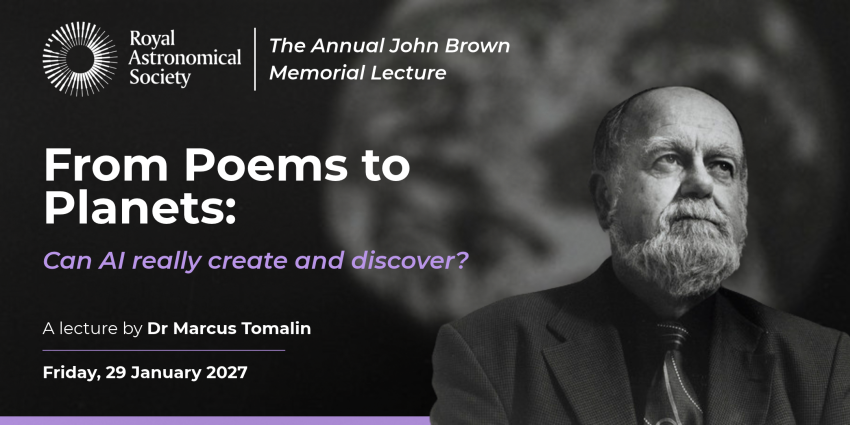

The growing ability of state-of-the-art Artificial Intelligence (AI) systems to identify patterns in vast datasets and to generate original poems, essays, computer code, and images has raised fundamental questions about discovery and creativity. Can such systems really make scientific discoveries? Can they be genuinely creative? Or do they simply rearrange existing material and identify regularities in ways that merely appear novel? This talk explores the subtle relationship between AI, discovery, and creativity, with reference to both the arts and the sciences. By considering important examples such as the identification of the planet Neptune in 1846 and the 1609 text of Shakespeare's Sonnet 14, the discussion will encourage a reconsideration of what we mean when we classify something as a 'discovery', and what actually counts as an instance of 'creativity'.
Remembering Professor John C. Brown
This is the fourth in an annual lecture series honouring the life of the late Professor John C. Brown, esteemed astronomer, Astronomer Royal for Scotland and a past winner of the Society's Gold Medal.
A long-standing supporter of the Society and its work, John served on its governing Council, and was a key supporter of the Society's RAS200: Sky & Earth programme. As Regius Professor of Astronomy at the University of Glasgow, his research focused on theoretical modelling of solar and stellar plasmas.
Alongside his academic work, John was renowned for his engaging public talks, often incorporating magic tricks to illustrate concepts.
Meet the Speaker
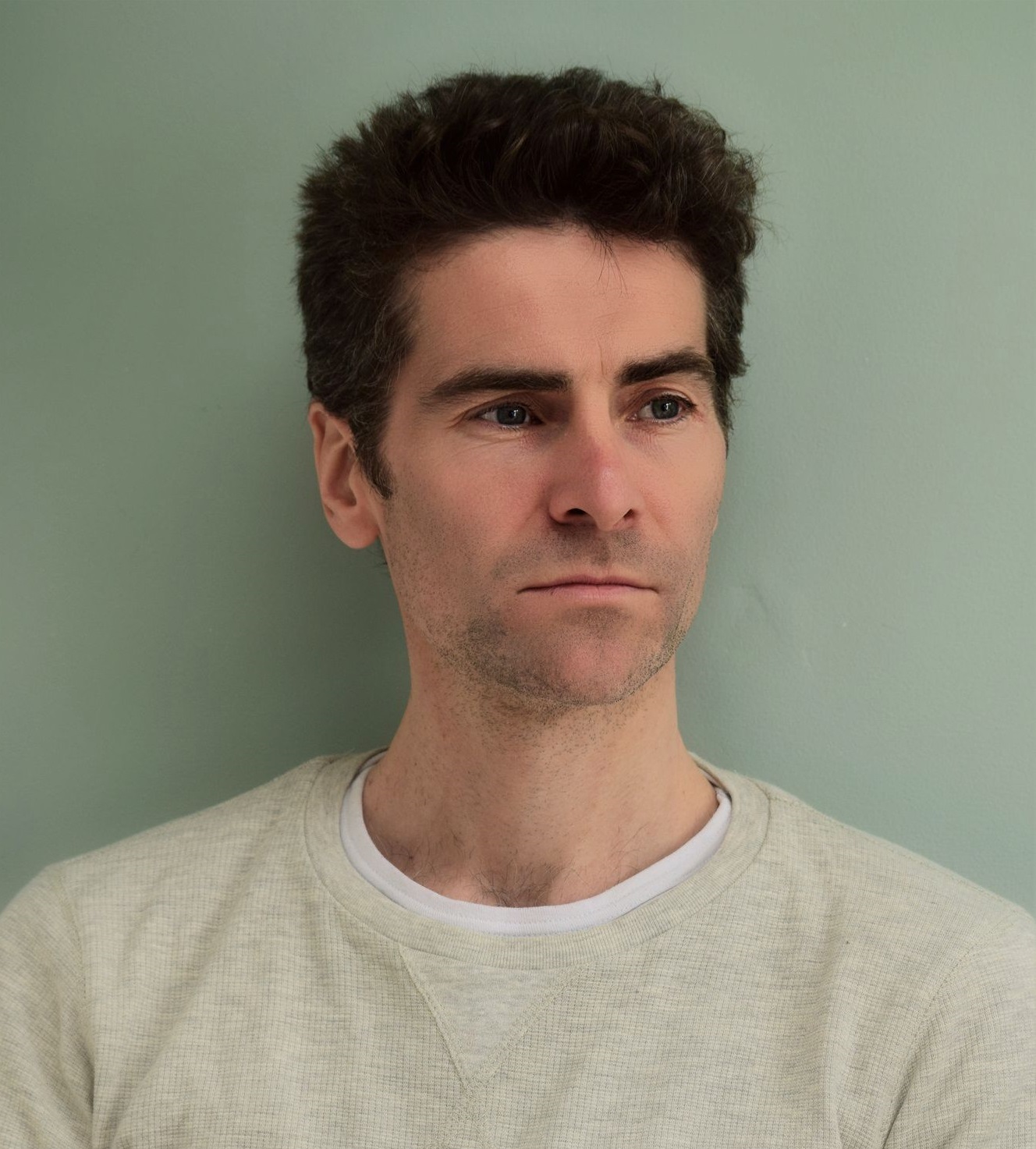
Dr Marcus Tomalin is an Affiliated Lecturer in the Machine Intelligence Laboratory in the Engineering Department at the University of Cambridge, where he has been based since the 1990s.
His interdisciplinary research spans artificial intelligence, linguistics, philosophy of language, and the literature of the long 18th century, with a recurrent focus on the relationship between mathematics and language.
His many publications include Linguistics and the Formal Sciences (2006), Romanticism and Linguistic Theory (2009), and The French Language and British Literature, 1756–1830 (2016), while more recent work has examined the social, ethical, and communicative implications of artificial intelligence, including the theoretical implications of large language models for multimodal communication.
Event schedule
| 17:30-18:00 | Registration |
| 18:00-18:10 | Welcome and Opening Remarks |
| 18:10-19:00 | Lecture: From Poems to Planets - Dr Marcus Tomalin |
| 19:00-20:00 | Drinks reception |
Accessibility information
Please note that this venue is currently not wheelchair accessible as the ramp is temporarily out of order, and step-free access is unavailable.
We apologise for any inconvenience and are working to restore full accessibility.
If you have any access requirements or questions, please contact us at events@ras.ac.uk or call us on 020 7734 4582.